

Table of Contents
About University of Malaysia Sabah UMS
University of Malaysia Sabah (UMS) is one of the best universities in Malaysia, known for its strong academic offerings, natural campus environment, and commitment to innovation and sustainability. Located in Kota Kinabalu, Sabah, UMS offers modern learning facilities and a global-friendly environment for students who want to study in Malaysia with a unique Borneo experience.
UMS has earned international recognition in major university rankings. In the latest QS World University Rankings 2027, UMS is ranked #1023 globally, while it ranks #214 in the QS Asia University Rankings 2026.
- Type: Public university
- Location: Kota Kinabalu, Sabah
- Academic strengths: Agriculture and forestry, business and economics, medical and health, engineering, physical sciences, and life sciences
- Campuses: 2
- Faculties: 13
- Ideal For: Students seeking a public university experience in Sabah with opportunities connected to Borneo's natural environment and regional research
History & Background
Established in 1994, University of Malaysia Sabah (UMS) was officially established on 24 November 1994 under Section 6(1) of the Universities and University Colleges Act 1971. It became Malaysia's ninth public university, with the aim of producing skilled and trained graduates in science, technology, and management to meet national and global workforce needs.
UMS began its first academic session in 1995 with 205 students, initially operating with three schools and one centre. The university expanded progressively, establishing additional schools and later transforming its academic structure from schools into faculties. In 1999, UMS also established its Labuan International Campus, while its Sandakan campus was established in 2006.
Today, UMS Malaysia operates across three campuses and offers programmes from bachelor's to doctoral level in science, humanities, and other disciplines. Its academic development has expanded to include areas such as tropical forestry, sustainable agriculture, food science, medicine and health sciences, computing, business, social sciences, Islamic studies, and creative technology.
The university has also continued developing its role in Sabah's heritage, research, and community engagement. For example, UMS has collaborated with the Sabah State Archives Department on research, education, and the preservation of Sabah's heritage resources, giving students access to materials that support their understanding of the state's history and heritage.
Campus Environment & Facilities
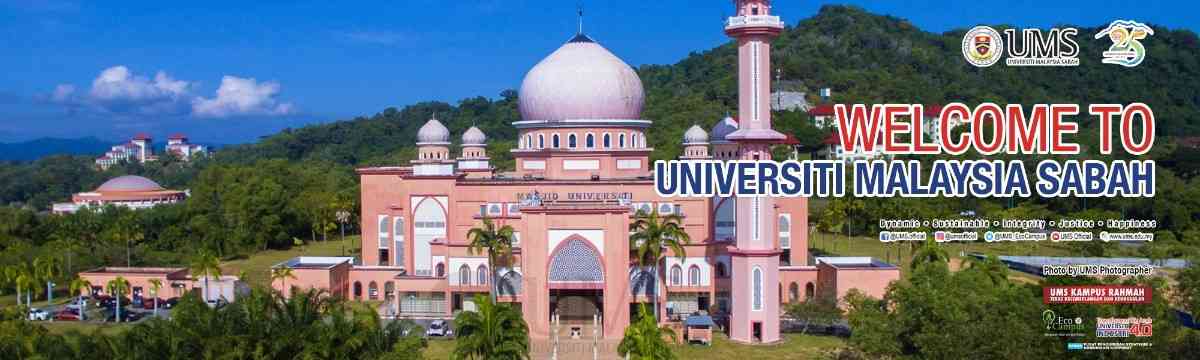
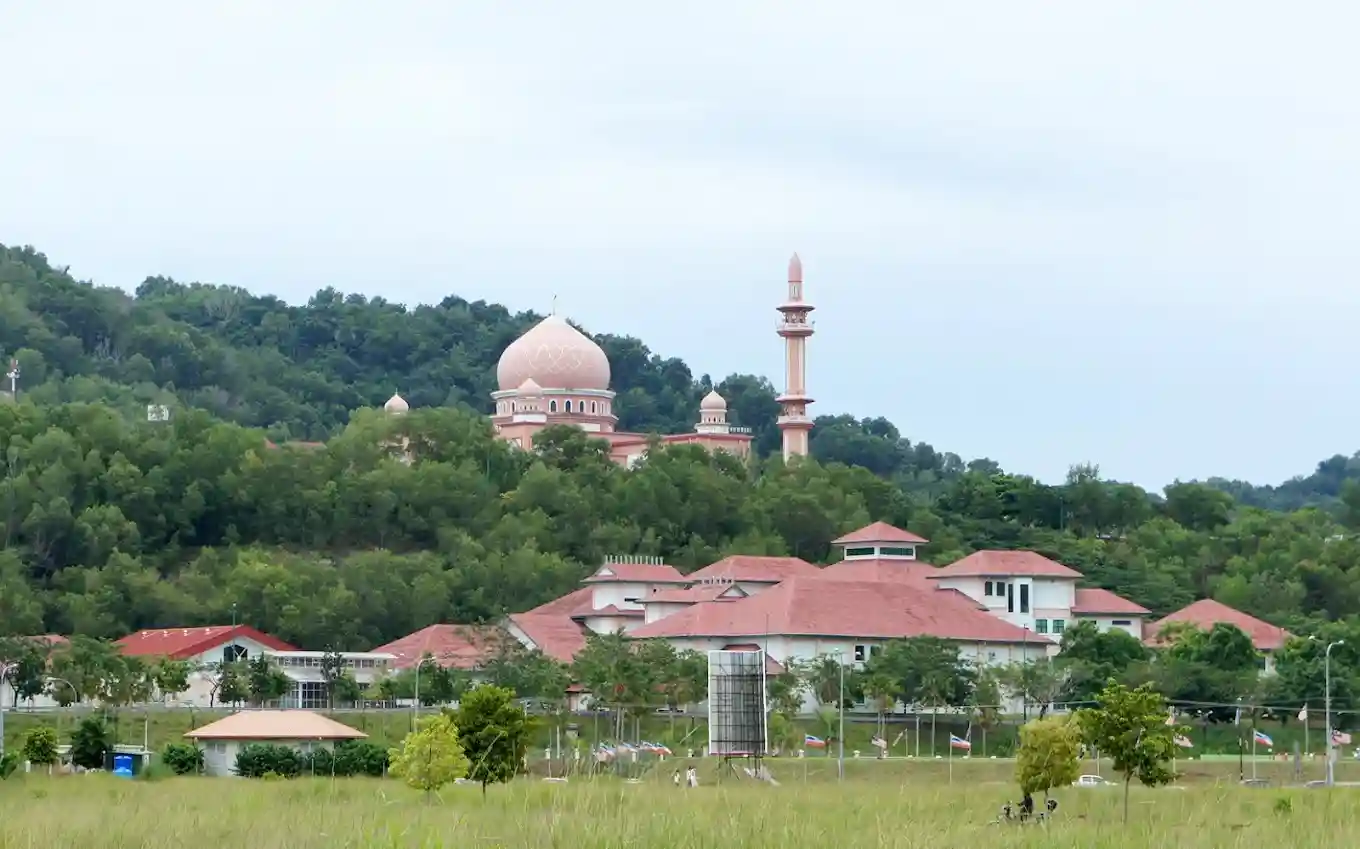
UMS features one of the most scenic campuses in Malaysia, overlooking the South China Sea and surrounded by lush tropical landscapes. The campus offers modern facilities including science labs, engineering workshops, fully equipped lecture halls, computer centers, and a comprehensive university library.
Students can enjoy residential colleges, dining halls, sports complexes, recreational centers, and cultural spaces. The International Student Affairs Office provides full support for visa processing, accommodation, and student integration.
Campus Highlights
- Libraries with books, journals, databases, e-books, e-journals, study resources, and digital services.
- Residential colleges and accommodation facilities designed to provide students with a safe and comfortable living environment.
- Sports and recreational facilities, including the UMS Sports Complex, football fields, multi-purpose courts, and outdoor areas.
- Campus-wide Wi-Fi coverage across faculties, lecture halls, residential colleges, libraries, research centres, and administrative areas.
- Student support services including counselling, healthcare, accommodation, welfare services, and student activities.
- Facilities connected to Sabah's marine and natural environment, including the UMS Jetty, Aquarium and Marine Museum, and research institutes.
Faculties & Academic Programmes
UMS offers a diverse range of academic programmes across arts, humanities, business, computing, science, engineering, medicine, agriculture, and tropical forestry. Its current academic structure includes 13 faculties, covering undergraduate and postgraduate study areas.
Faculties and Academic Focus
| Faculty | Academic Focus |
|---|---|
| Faculty of Science and Technology | Biological sciences, physical sciences, mathematics, and related scientific fields |
| Faculty of Engineering | Civil, electrical and electronics, chemical, mechanical, computer, and oil and gas engineering |
| Faculty of Business, Economics & Accounting | Business, economics, accounting, finance, management, and related areas |
| Faculty of Computing and Informatics | Software, network engineering, multimedia technology, business computing, and data science |
| Faculty of Food Science and Nutrition | Food science, nutrition, food service, food technology, and bioprocessing |
| Faculty of Medicine and Health Sciences | Medicine and nursing |
| Faculty of Tropical Forestry | Tropical forestry, conservation, sustainable forestry, and wood-related industries |
| Faculty of Sustainable Agriculture | Crop production, horticulture and landscaping, and livestock production |
| Faculty of Psychology & Social Work | Psychology and social work |
| Faculty of Social Science and Humanities | Social sciences, humanities, and related disciplines |
| Faculty of Education and Sport Studies | Education, teaching, and sport-related studies |
| Academy of Arts & Creative Technology (ASTiF) | Creative arts, technology, and multidisciplinary creative studies |
| Faculty of Islamic Studies | Islamic Studies, Shariah, and Usuluddin |
UMS also has the Labuan Faculty of International Finance, which offers programmes in international business, international finance, international marketing, Islamic finance, and related financial fields.
For students searching for an UMS course, the university currently lists undergraduate programmes ranging from three to five years depending on the faculty and programme. The university also offers master's and doctoral programmes across its academic areas.
UMS Malaysia also highlights research and innovation connected to Borneo's biodiversity, indigenous heritage, and sustainable development, giving students opportunities to study within a distinctive regional context.
UMS Fees and Tuition Costs
The cost of studying at University of Malaysia Sabah (UMS) depends on your programme, study level, field of study, and whether you are a Malaysian or international student. UMS publishes separate fee structures for undergraduate, postgraduate coursework, and postgraduate research programmes.
Undergraduate Fees
Undergraduate tuition fees vary by programme and faculty. Students should check the official fee schedule for their specific UMS course because programmes in areas such as medicine, engineering, science, business, and other disciplines can have different fee structures.
Postgraduate Fees
For postgraduate study, UMS provides separate fees for coursework and research programmes.
For example, the official UMS Master of Business Administration page lists the following total fees for the full programme:
-
Malaysian students: RM17,355 for full-time study
-
International students: RM36,030.40 for full-time study
These totals include tuition and other miscellaneous fees for the programme duration. UMS states that fees are subject to change.
Postgraduate Research Fees
Fees for postgraduate research programmes are charged according to the field of study and semester. The official UMS fee structure lists different rates for science and social science programmes and separate fees for local and international students.
For full-time international students, the published research fees include:
- Master in Science: RM3,650 per semester
- PhD in Science: RM3,850 per semester
- Master in Social Science: RM3,150 per semester
- PhD in Social Science: RM3,350 per semester
- Viva fee: RM1,000 for a Master and RM1,500 for a PhD
- International health insurance: RM500 per year
- Personnel bond: RM2,000, refundable
Additional Costs for International Students
International students should also budget for applicable non-tuition charges. UMS fee schedules can include health insurance, personnel bond, registration-related charges, and other miscellaneous fees depending on the programme and study level.Because fees can change and differ between programmes, prospective students should check the latest official UMS fee schedule for their chosen programme before applying.
Scholarships & Financial Support
UMS offers several scholarships for international students, including merit-based awards, partial tuition fee waivers, and postgraduate research funding. These financial aids help qualified international students access higher education without financial stress.
Malaysia’s overall cost of living is affordable, making UMS a preferred destination for students seeking high-quality education at reasonable expenses.
Scholarships for International Students
- Malaysia International Scholarship (MIS): A Malaysian government scholarship for eligible international postgraduate students. The scholarship is administered by the Malaysian government, and UMS does not select or evaluate applicants.
- Malaysia Technical Cooperation Programme (MTCP) Scholarship: A Malaysian government scholarship available to eligible international students. Like MIS, MTCP is administered by the Malaysian government and is highly competitive.
- UMS International Tuition Fees Scheme (SYPA): A UMS funding scheme for international postgraduate students. Applicants must first be enrolled as active UMS students and meet the scheme's research-progress requirements. Funding is also subject to availability.
Other Financial Support
International students may also use scholarships or sponsorships provided by their home-country governments or other organisations. UMS advises sponsored students to provide the relevant sponsorship or scholarship documentation as required.
Note: MIS and MTCP are not UMS-funded scholarships. Their application and selection processes are handled by the respective Malaysian government bodies. Students should check the official scholarship websites for current application dates and eligibility requirements.
Student Life & International Community
UMS provides a vibrant student experience with various cultural, academic, and recreational activities. Students can join clubs, societies, community service programmes, and sports teams.
The campus promotes multicultural harmony and supports international student integration through orientations, cultural events, mentorship programmes, and student welfare services. Residential halls offer comfortable living spaces with easy access to campus facilities, dining, and transportation.
Student Life Highlights
- Clubs and societies: Students can join faculty-based associations, academic clubs, cultural groups, and other student organisations based on their interests.
- Student leadership: The Student Representative Council (MPP) represents student interests, while residential college committees organise activities and support student welfare within the colleges.
- Residential college activities: Students living in university accommodation can participate in leadership, social, spiritual, community, and co-curricular programmes organised through the residential colleges.
- Sports and recreation: UMS provides sports facilities and organises activities including football, volleyball, futsal, athletics, badminton, chess, petanque, and other recreational activities.
- Cultural activities: UMS supports arts and cultural activities designed to develop students' communication, leadership, teamwork, creativity, and other soft skills.
- Community engagement: Co-curricular programmes include leadership and community activities that encourage students to develop social interaction, teamwork, and leadership skills.
- Student support: UMS provides services including counselling, residential colleges, sports and recreational activities, student committees, cafeterias, banking, and other campus facilities.
International Student Community
- Multicultural environment: UMS has international graduates and students from countries including China, Brunei, Iraq, and Indonesia, contributing to a multicultural campus environment.
- International mobility: Students can participate in mobility programmes that provide exposure to different cultures, education systems, and international perspectives.
- Cultural exchange: UMS conducts cultural activities and cross-cultural programmes that encourage interaction and understanding between students from different backgrounds.
- Orientation: New students participate in the UMS orientation programme, which helps them complete registration, settle into residential colleges, and begin their university experience.
- Residential community: Residential colleges are designed to provide safe and comfortable accommodation while supporting student development and interaction outside the classroom.
- International support: UMS has a dedicated internationalisation and global engagement function that supports matters relating to international students and global partnerships.
Why Choose This University?
UMS is ideal for students who want a balance of strong academics, affordability, nature-rich surroundings, and supportive services.
Reasons to Choose UMS
- Recognised in global university rankings: UMS is ranked #1023 in the QS World University Rankings 2027 and #214 in the QS Asia University Rankings 2026, giving students an internationally recognised university to consider.
- Wide range of academic options: The university offers programmes across science, engineering, medicine, food science, agriculture, forestry, computing, business, humanities, Islamic studies, education, and creative technology. This gives students a broad choice when selecting an UMS course.
- Distinctive Borneo learning environment: The main campus is in Kota Kinabalu and faces the South China Sea. UMS also has campuses in Labuan and Sandakan, giving students different academic and geographical settings.
- Strong focus on sustainability: UMS has developed its EcoCampus initiative around sustainable development, ecological protection, environmental compatibility, resource conservation, and environmental stewardship.
- Good fit for environment and biodiversity interests: Sabah provides a distinctive setting for areas such as marine science, conservation biology, tropical ecology, biotechnology, and ecotourism. UMS also identifies Borneo's biodiversity and sustainable development as important research areas.
- Practical and industry-linked learning: UMS highlights fieldwork, industrial and community engagement, internships, structured internships, and national and international mobility programmes as part of its approach to student development.
- Research opportunities: Students can study in an environment supported by research centres and institutes, with UMS focusing on areas including Borneo's biodiversity, indigenous heritage, and sustainable development.
- International and multicultural environment: UMS Malaysia welcomes students from different countries and promotes cultural harmony. Its official profile notes international graduates from countries including China, Brunei, Iraq, and Indonesia.
- Campus facilities and outdoor spaces: The university provides libraries, laboratories, Wi-Fi and online facilities, sports centres, hostels, student centres, and outdoor facilities. The main campus also includes natural spaces and a beach and jetty.
- Career and personal development: UMS combines academic learning with opportunities for internships, industry engagement, mobility, entrepreneurship, communication skills, critical thinking, and career development.
- A university with a regional identity: For students comparing the Best University in Sarawak or other universities across Borneo, UMS offers a different experience through its location in Sabah, its connection to Borneo's natural environment, and its focus on sustainability and regional research.
Admission Process for International Students
The University of Malaysia Sabah admission process depends on whether you are applying for an undergraduate or postgraduate programme. International applicants must meet the academic and English-language requirements set by UMS and provide the required supporting documents.
Undergraduate Admission Requirements
For an international UMS course at undergraduate level, the general requirements include:
- GCE A Level/STPM/HSC or equivalent: A pass with at least Grade C in three subjects.
- Diploma or foundation: A recognised diploma or equivalent with a minimum CGPA of 3.00.
- Cambridge International Examination: At least Grade B, where applicable.
- English proficiency: For the Bachelor of Business with Honours in International Business, UMS specifies IELTS 5.0, TOEFL iBT 42, PTE Academic 47, or MUET Band 3.5. Requirements can vary by programme.
- Programme-specific subjects: Some programmes may require particular subjects or additional academic conditions, so applicants should check the requirements for their chosen programme.
Postgraduate Admission Requirements
For international students applying for postgraduate study at UMS Malaysia:
- Master's by coursework: Generally requires a recognised Bachelor's degree with a minimum CGPA of 2.50. Applicants below this threshold may be considered with relevant work experience, subject to university and faculty requirements.
- Master's by research: Entry requirements depend on the relevant faculty and programme. Some programmes require a Bachelor's degree with a minimum CGPA of 2.75, while other entry routes may apply.
- PhD: Applicants generally need a Master's degree or an equivalent qualification recognised by the UMS Senate. Additional faculty requirements may apply.
- English proficiency: International postgraduate applicants from non-English-speaking countries generally need IELTS Band 5 or an accepted equivalent. Some programmes may have higher requirements.
- Financial capacity: International postgraduate applicants must provide evidence that they can financially support themselves during their studies at UMS.
Documents Required
Depending on the programme and study level, international applicants may need to submit:
- Passport
- Passport-sized photograph
- Academic certificates and transcripts
- English-language proficiency certificate
- Research proposal for research-based postgraduate programmes
- Scholarship or sponsorship letter, if applicable
- Financial-support evidence
- Additional documents requested by the relevant faculty or programme
The official UMS postgraduate application portal specifically lists passport, academic certificates and transcripts, English-language certificates, research proposals for research programmes, and scholarship or sponsorship letters where applicable.
Step-by-Step Application Process
- Choose your programme: Select the undergraduate or postgraduate UMS course that matches your academic qualifications.
- Check programme requirements: Review the specific academic, subject, English-language, and other requirements.
- Prepare documents: Gather your certificates, transcripts, passport, English test results, and other required documents.
- Submit your application: Apply through the appropriate UMS online application system.
- Faculty assessment: UMS reviews the application and the relevant faculty, centre, or institute assesses academic suitability.
- Check your application status: Postgraduate applicants can monitor their application through the UMS application portal.
- Receive the offer: Successful applicants receive an admission offer from UMS.
- Complete international student requirements: After receiving an offer, follow the university's instructions for registration and the applicable Malaysian immigration and student-pass procedures.
- Register at UMS: Complete the required university registration procedures after arriving in Malaysia.
Application Intakes
For postgraduate applicants, the official UMS application portal states that applications are open throughout the year and allows applicants to apply for the February or September intake. Applications received after the applicable deadline are processed for the next intake.
For undergraduate programmes, intake dates and application deadlines can vary by programme. Students should therefore check the current official UMS admission information for their chosen programme rather than relying on a single university-wide deadline.
Important for International Applicants
Admission requirements are not identical across every University of Malaysia Sabah programme. Medicine, computing, engineering, business, science, and other programmes can have additional academic or English-language requirements. Always check the programme-specific requirements before submitting your application.
Career Prospects & Alumni Highlights
UMS graduates find opportunities across various fields such as marine science, engineering, IT, tourism, education, business, environmental management, and government sectors.
The university’s Career Centre offers services including job fairs, internships, resume workshops, interview preparation, and industry networking sessions. Many alumni occupy roles in multinational companies, government agencies, research centers, and NGOs.
Career Prospects
- Business and Economics: Graduates of the Bachelor of Economics in Planning and Development Economics can work as economic researchers, data analysts, financial planners, and planning and development consultants, as well as pursue opportunities in business and the public sector. The programme reported a 97.8% graduate employability rate in 2023.
- Financial Economics: Graduates can pursue roles in insurance companies, mutual funds, corporate finance, brokerage firms, regulatory bodies, economic research organisations, and the public sector. The Financial Economics programme reported a 98.8% graduate employability rate in 2023.
- Accounting: UMS's Bachelor of Accounting is recognised by the Malaysian Institute of Accountants and has accreditation or recognition connections with ACCA, MICPA, and CIMA. This provides graduates with pathways into professional accounting and related business careers.
- Science and Health: UMS graduates work across scientific and healthcare-related fields. The university also conducts graduate tracer studies for areas such as medicine, providing information on graduate employment and career progression.
- Overall graduate employment: According to UMS's 12-month graduate tracer data for the 2024 graduating cohort, 3,801 of 4,493 graduates were employed or self-employed, representing a reported employment rate of 97.6%.
Career Development Support
- Career opportunities: Final-year students, graduates, and alumni can access information about available career opportunities through the official UMS Career and Alumni Centre channels.
- Career and Alumni Centre: Current students, recent graduates, and alumni can approach the UMS Career and Alumni Centre for career-related assistance and services.
- Graduate employability tracking: UMS uses graduate tracer studies to monitor graduate employment outcomes. Graduates are asked to report whether they are working, self-employed, continuing their studies, waiting to begin an offered job, or undertaking further skills development.
Alumni Highlights
- 53,000+ graduates: UMS states that it has produced more than 53,000 graduates, including international students.
- International alumni: UMS specifically identifies alumni from countries including China, Brunei, Iraq, and Indonesia, showing that its graduate community extends beyond Malaysia.
- Professional and entrepreneurial careers: According to UMS, its alumni work in renowned organisations or as entrepreneurs across different professional fields.
- Alumni services: UMS alumni receive access to career announcements, university activities, and other alumni benefits. Current students, recent graduates, and alumni can also use Career and Alumni Centre services.
- Alumni involvement: Graduates can remain connected with UMS by participating in university activities or contributing through expertise, sponsorship, donations, and volunteer services.
Living in Kota Kinabalu, Sabah
Kota Kinabalu is one of Malaysia’s most scenic and student-friendly cities. Known for its beaches, islands, and mountain views, the city provides an exciting lifestyle for international students. Access to shopping malls, public transport, local markets, and affordable food options makes it convenient to live and study.
The cost of living is moderate, and students enjoy a warm, multicultural community environment with a wide range of recreational activities available.
Kota Kinabalu Climate & Weather Highlights
- Temperature: Kota Kinabalu has a warm tropical climate. Historical climate data shows an average annual 24-hour temperature of around 27°C, with monthly averages generally remaining within a narrow range.
- Typical daytime weather: Sabah's lowland areas can reach around 32°C, so students should expect warm conditions and dress accordingly.
- Tropical climate: Kota Kinabalu has an equatorial or tropical climate characterised by relatively uniform temperatures, high humidity, and substantial rainfall.
- Humidity: Humidity remains relatively high throughout the year. Sabah climate data records mean monthly relative humidity generally between 70% and 90%.
- Rainfall: Kota Kinabalu receives substantial rainfall throughout the year. Data from the Kota Kinabalu area recorded average annual rainfall of about 2,884 mm between 2000 and 2013.
- Drier months: February and March are generally among the drier months in Kota Kinabalu, according to the Kota Kinabalu City Hall climate profile.
- Wetter period: Rainfall typically increases during parts of the year, with October identified as a peak rainfall period in the Kota Kinabalu climate profile.
- Monsoon seasons: Kota Kinabalu experiences the Northeast Monsoon from November to March and the Southwest Monsoon from May to September, with two shorter inter-monsoon periods between them.
- Sunshine: Sabah receives around six hours of sunshine per day on average, although cloud cover and rainfall can vary by season and location.
Lifestyle & Location
- Coastal setting: Kota Kinabalu's location on the west coast of Sabah gives students easy access to beaches, islands, and South China Sea views.
- Natural surroundings: The city provides access to Sabah's wider natural environment, including forests, marine areas, mountains, and biodiversity-rich locations.
- Food and daily life: Students can experience Sabah's multicultural food, local markets, shopping areas, restaurants, and everyday city facilities.
- Getting around: Kota Kinabalu functions as Sabah's main urban centre, providing access to public facilities, commercial areas, transportation services, and Kota Kinabalu International Airport.
- What to pack: Lightweight and breathable clothing, an umbrella or rain jacket, comfortable footwear, and sun protection are practical choices because of the city's warm, humid, and rainy conditions.
Conclusion
Studying at University of Malaysia Sabah offers international students a well-rounded academic experience that combines quality education, affordability, and a truly unique natural environment. With its strong academic programmes, research focus, scenic coastal campus, and supportive international student services, UMS stands out as an excellent choice for students seeking both academic excellence and personal growth. Located in Kota Kinabalu, Sabah, the university provides a peaceful yet vibrant lifestyle enriched by cultural diversity and natural beauty. For students looking to study in Malaysia while enjoying a globally recognized education in a distinctive Borneo setting, UMS represents a rewarding and future-focused destination.