

Table of Contents
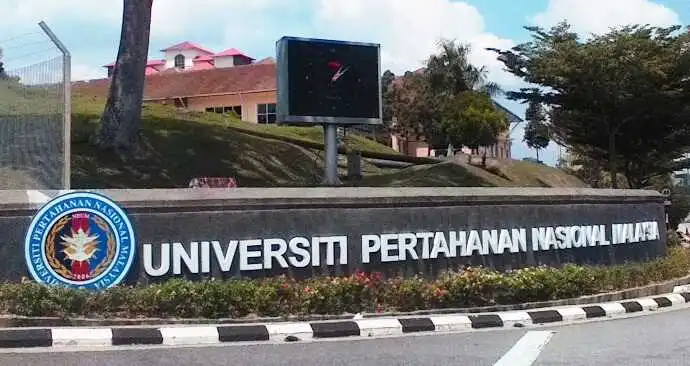
Introduction of National Defence University of Malaysia (UPNM)
The National Defence University of Malaysia (UPNM) is Malaysia’s premier military and defence-focused higher education institution. As the country’s only university combining academic excellence with military leadership training, UPNM offers a unique educational experience for students who want to pursue careers in defence, security, engineering, health sciences, and strategic leadership.
For international students, UPNM stands out because of its structured discipline, advanced research facilities, modern campus, and strong government support. Students benefit from world-class military values, leadership development, and high-quality academic programmes
Quick Facts
- Type: Public Military University
- Location: Kuala Lumpur, Malaysia
- Campus Style: Fully residential, modern military-academic campus
- Academic Focus: Defence studies, engineering, security, management, health sciences
History & Background
The National Defence University of Malaysia (UPNM) was established on 1 June 1995 under the name of the Malaysian Armed Forces Academy (Akademi Tentera Malaysia, ATMA). ATMA was formed to run undergraduate academic programmes as well as military training for Officer Cadets of the Armed Forces of Malaysia.
It was then given a broader role and was gazetted as the National Defence University of Malaysia (UPNM) on 10 November 2006. Indeed, while UPNM was established in its present form in 2007/2008, the university had been running undergraduate programmes since 1995 as a joint initiative of the Ministry of Defence and Universiti Teknologi Malaysia for 11 years prior to 2007.
In this period, there were approximately 1,017 graduates produced in three common fields: Engineering, Science, and Management. The graduates also received military commissions and served in various units of the Malaysian Army, Royal Malaysian Navy, and Royal Malaysian Air Force.
Today, UPNM continues this defense-centric tradition of academia by integrating higher education, military training, research, and professional training. Its programmes have extended into areas related to defence, security, engineering, science and technology, management in business, as well as health, in addition to some of its original fields.
Vision & Mission
- Vision: To become the regional Centre of Excellence for Education and Training, as well as Knowledge Development in Defence.
- Mission: To serve the nation in training leaders and professionals, creating knowledge, disseminating and applying knowledge, and engaging in policy research in the fields of defence science and technology.
Core Values
The motto of UPNM as an institution is: Duty, Honor, Integrity
These values are referred to as essential for students and staff at the university, as they are meant to represent important tools to grow professionally and personally.
UPNM’s stated goals also highlight:
- Intellectual excellence via teaching, learning, research and scholarship
- Dedication and patriotism in service to the nation
- Social responsibility, spiritual values, cultural ethics and high morals
- Respect for ethnic, cultural and religious pluralism
- Powerful and effective communications
- Leadership and expertise in defence technology, economics and diplomacy, military affairs and security studies
Growth & Development
In the years since its founding, UPNM has grown from being primarily an undergraduate and military training institution to becoming a multidisciplinary defence and security university. It has expanded through academic programmes, research, international cooperation, and specialized education in fields related to defence and national security. UPNM has a strategic framework and focus for the years 2025–2030, which is organized under four pillars: Scholarship, Centres of Excellence, Generation, and Governance.
Campus Environment & Facilities
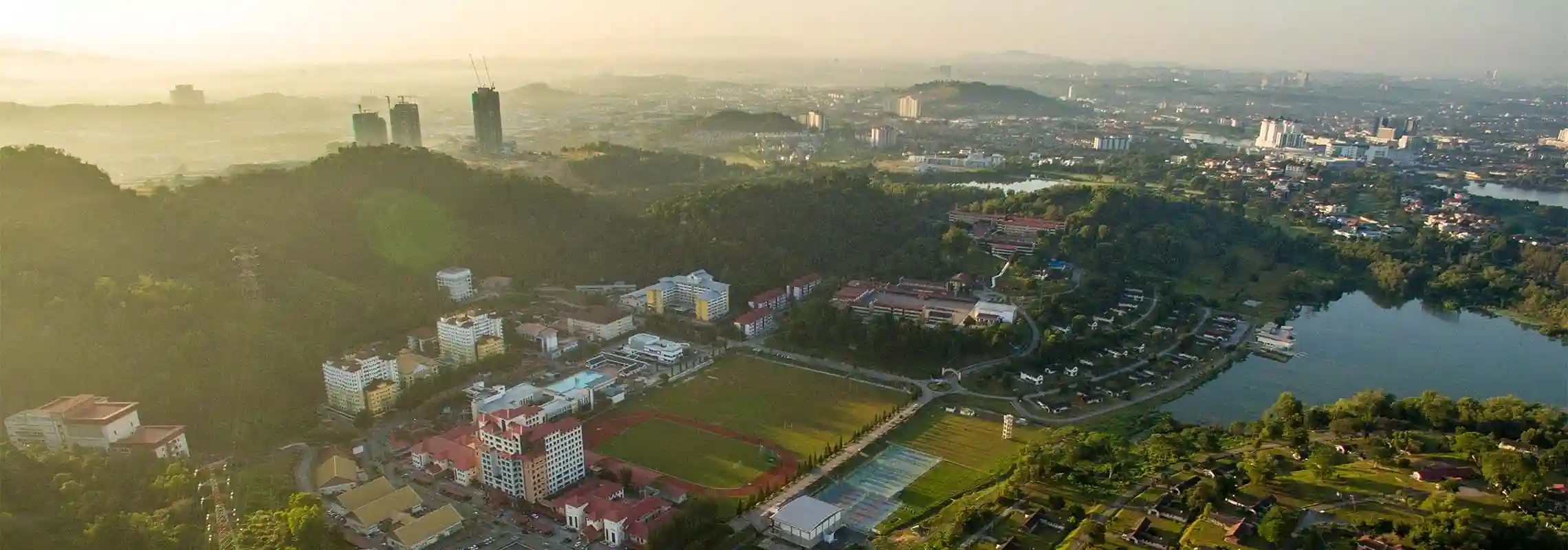
The Malaysian National Defence University (UPNM) is located in Kem Perdana Sungai Besi, in Kuala Lumpur. The university exposes students to an academic environment on a campus with a focus on education, student development, fitness, leadership training, and defence-based education. Teaching and learning spaces, sports and recreation facilities, health services, residential colleges, and training facilities are included within UPNM facilities.
The campus is a mix of academic and defence-oriented buildings. These include smart classrooms, a maritime center, a ship bridge simulator, a health center, a gymnasium, a swimming pool complex, sports courts, a football field, a running track, and a firing range. UPNM also manages a training camp and outdoor facility for student training, leadership, and development activities in Jelebu, known as Kongkoi Camp.
Key Facilities
- Smart Classrooms: Teaching and learning environments enabled with appropriate hardware and software for facilitating interactive, student-centred education.
- Maritime Facilities: UPNM Maritime Centre and Ship Bridge Simulator are resources available to support maritime learning and training for cadet officers.
- Health Centre: Health care and medical services for the university community.
- Sports & Recreation: gymnasium, swimming pool, football field, running track, multipurpose court, tennis court, volleyball court, netball court, and sepak takraw court.
- Defence Training Facilities: UPNM has dedicated facilities such as a firing range and Kongkoi Camp for controlled training and student development.
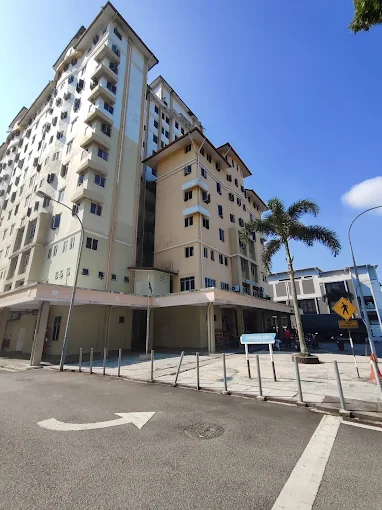
- Residential Colleges: UPNM has several residential colleges including Kolej Tuah, Kolej Lekir, Lekiu & Mahsuri, Kolej Jebat, Kolej Kasturi and Kolej Srikandi. The residential facilities also provide Wi-Fi, self-service laundry, grocery and tailoring shops, indoor activity rooms, meeting rooms, and other amenities for students.
- Campus Mosque: Facilities for religious and educational activities as well as a place of worship.
Student Support Services
- Student welfare and development services at UPNM are provided through the Department of Student Affairs and Alumni. Among these are:
- Welfare and development support for students
- Counselling and advice services
- Graduate employability and career development support
- Cooperation with the industry
- Guidance and student activities
- Accommodation and residential support
The International Office at UPNM also assists all international students in registration, immigration/visa matters, health, airport reception, accommodation, cultural/educational adjustment, and any other support during their studies.
A Campus Designed for Academic and Personal Development
UPNM provides a campus atmosphere conducive to learning outside of the classroom. Sports, recreation, health, residential, cultural, and defence-related facilities accompany academic facilities and support students’ academic, physical, and personal development. The university also says it is committed to ensuring an inclusive and barrier-free environment and campus for persons with disabilities, including accessible parking, ramps, and toilets.
Prospective students planning to study at the National Defence University of Malaysia should also factor in program-specific tuition and other living costs in their study decisions. Because UPNM course fees are dependent on the programme, level of study, and category of the student, prospective students should check the current fee information for the course they are planning to study instead of relying on a single figure for university fees.
- UPNM Facilities: Official UPNM Facilities page
- UPNM Student Guide: Official UPNM Student Guide
- UPNM Campus Tour: Official UPNM Campus Tour
- UPNM Student Support & Safety: Official UPNM Student Guide and Support
Faculties & Academic Programmes
The National Defence University of Malaysia (UPNM) has undergraduate and postgraduate programmes in the fields of defence, engineering, technology, management, health sciences, strategic studies, computing, and the like. Its faculties, centres, and academies provide foundation, diploma, undergraduate, postgraduate, and professional learning opportunities.
Main Faculties and Academic Centres
UPNM's current academic structure includes:
- Faculty of Engineering
- Faculty of Defence Science and Technology
- Faculty of Management and Defence
- Faculty of Defence Medicine and Health
- Defence Foundation Centre
- Language Centre
- Defence Fitness Academy
- Academy of Islamic Defence Studies
- APEL Centre
Foundation Programmes
The Defence Foundation Centre offers foundation programmes designed to provide students with an academic foundation for further higher education. Current programmes include:
- Foundation in Medical Studies
- Foundation in Engineering and Technology
- Foundation in Management and Strategy
- Foundation in Management and Strategy with Islamic Studies Elective
Major Undergraduate Programmes
UPNM offers undergraduate programmes across several academic areas. Current programmes include:
Defence, Management & Strategic Studies
- Bachelor of Strategic Studies
- Bachelor of Defence Human Resource Management
- Bachelor of Defence and Security Management
- Bachelor of Science (Hons) in Policing, Global Security, and Intelligence
- Bachelor of International Relations (Diplomacy and International Security)
- Bachelor of Supply Chain and Logistics Management (Hons)
Engineering
- Bachelor of Civil Engineering (Hons)
- Bachelor of Mechanical Engineering (Hons)
- Bachelor of Electrical and Electronic Engineering (Hons)
Computing & Technology
- Bachelor of Computer Science (Computer Systems Security)
- Bachelor of Computer Science (Artificial Intelligence) (Hons)
- Bachelor of Computer Science (Hons)
- Bachelor of Operations Research with Data Science
- Bachelor of Maritime Technology
- Bachelor of Science (Hons) in Maritime Logistics and Transportation
Health Sciences
- Bachelor of Medicine
UPNM also offers programmes in language and cross-cultural communication, defence fitness, and Islamic defence and security studies.
Postgraduate Programmes
UPNM offers postgraduate programmes through both coursework and research modes. Its current postgraduate offerings cover engineering, defence science and technology, management and defence studies, medicine and defence health, computing, security, maritime technology, and related research fields.
Examples of master's programmes offered through coursework include:
- Master in Mechanical Engineering
- Master of Science in Engineering (Aeronautics)
- Master in Maritime Technology
- Master of Science in Cyber Security and Management
- Master of Science in Digital Security
- Master of Business Administration (Supply Chain and Logistics)
- Master of Business Management (Defence & Security)
- Master in Strategy and Defence Studies
- Master of Public Health (Defence and Security)
UPNM also provides postgraduate research degrees at the master's and PhD level in engineering, management, strategy and defence studies, international relations, computer science, defence studies, military science, maritime technology, mathematics, statistics, biology, physics, chemistry and various other fields.
Teaching & Learning Approach
The UPNM university experience integrates normal university education with a specialized focus on matters related to defence. Students can participate in academic study, research, practical training, and activities in leadership, technology, security, defence, and professional development, depending on the programme. For instance, the engineering faculty at UPNM emphasizes hands-on projects, practicum, modern laboratories, research centres, and applications within education.
The programme structure at the university therefore enables students to combine academic knowledge within their discipline with practical and professional skills within that field.
Overall Fee Structure at UPNM
UPNM, National Defence University of Malaysia, charges different fees based on the programme, level of study, and category of student. Fees may include registration fees, tuition fees, accommodation fees, student welfare fees, development fees, and service fees. Thus, the cost of studying at UPNM is different for each programme.
Undergraduate Fee Structure
The UPNM course fee for undergraduate programs varies according to the program of study, study requirements, and category of student. When enrolling at UPNM, prospective students are advised to confirm the most recent fee schedule, as tuition and other university fees are subject to change.
UPNM Postgraduate Fees — Faculty of Engineering & Defence Science/Technology
| Student Category | Programme | Semester 1 | Subsequent Semester |
|---|---|---|---|
| Malaysian | Master's – Part-time | RM1,650 | RM1,500 |
| Malaysian | Master's – Full-time | RM2,150 | RM2,000 |
| Malaysian | PhD – Part-time | RM1,750 | RM1,600 |
| Malaysian | PhD – Full-time | RM2,250 | RM2,100 |
| International | Master's | RM3,750 | RM3,600 |
| International | PhD | RM4,200 | RM4,050 |
UPNM Postgraduate Fees — FPPP & PB
| Student Category | Programme | Semester 1 | Subsequent Semester |
|---|---|---|---|
| Malaysian | Master's – Part-time | RM1,550 | RM1,400 |
| Malaysian | Master's – Full-time | RM1,950 | RM1,800 |
| Malaysian | PhD – Part-time | RM1,750 | RM1,600 |
| Malaysian | PhD – Full-time | RM2,250 | RM2,100 |
| International | Master's | RM3,150 | RM3,000 |
| International | PhD | RM3,750 | RM3,600 |
UPNM Postgraduate Fees — AKP
| Student Category | Programme | Semester 1 | Subsequent Semester |
|---|---|---|---|
| Malaysian | Master's – Part-time | RM1,500 | RM1,350 |
| Malaysian | Master's – Full-time | RM1,700 | RM1,550 |
| Malaysian | PhD – Part-time | RM1,750 | RM1,600 |
| Malaysian | PhD – Full-time | RM2,150 | RM2,000 |
| International | Master's | RM3,750 | RM3,600 |
| International | PhD | RM4,200 | RM4,050 |
UPNM Postgraduate Fees — FKPK
| Student Category | Programme | Semester 1 | Subsequent Semester |
|---|---|---|---|
| Malaysian | Master's – Part-time | RM4,200 | RM4,050 |
| Malaysian | Master's – Full-time | RM4,700 | RM4,550 |
| Malaysian | PhD – Part-time | RM4,400 | RM4,250 |
| Malaysian | PhD – Full-time | RM5,000 | RM4,850 |
| International | Master's | RM7,950 | RM7,800 |
| International | PhD | RM8,760 | RM8,610 |
What is included in the semester amount?
From the UPNM fee tables you uploaded:
- Registration fee: RM150 — charged once in Semester 1
- Service fee: RM450 per semester
- Health fee: RM50 per semester
- Insurance: RM50 per semester
- Postgraduate development & student activity fund: RM50 per semester
- Study fee: varies according to faculty, programme level and study mode
Therefore, the Semester 1 amount is higher because it includes the RM150 registration fee.
There are also separate charges listed by UPNM for:
- Alumni: RM100
- Convocation: RM250
Scholarships & Financial Support
UPNM also has provisions for tuition financing as well as financial assistance and welfare support with agencies and organizations outside the university, as well as with government agencies and the university itself. Student welfare assistance and tuition-financing facilities are coordinated by the Department of Student Affairs and Alumni (JHEPA) for qualifying students.
Available Financial Support
- PTPTN: Tuition financing through the National Higher Education Fund Corporation.
- JPA: Financing and scholarship opportunities through the Public Service Department.
- MARA: Education financing opportunities for eligible students.
- SULUNG 2.0: Assistance available through the SULUNG Programme.
- DSA Scholarship Fund: Financial assistance through the Defence Services Asia scholarship fund.
- Zakat and Endowment Assistance: Financial assistance coordinated through UPNM's student welfare initiatives.
UPNM also receives financial support through external initiatives. In April 2026, UPNM reported that the DSA & NATSEC Asia Graduate Fund provided financial assistance to 48 underprivileged UPNM students for the 2025/2026 academic session. The university reported the contribution as RM100,000 in scholarship funds.
Postgraduate Research Support
Depending on eligibility and funding, graduate research students might also be eligible for Graduate Research Assistantships (GRAs). UPNM’s graduate study rules and regulations define GRAs as GRAs related to active research grants, the Trust or Fellowship Fund of the University, or Research Fellowship schemes. In addition, GRA students must comply with all fee and administrative conditions of the University.
Financial Support for Foundation Students
According to official Ministry of Higher Education documents listing programme requirements, students who meet the eligibility criteria and are enrolled in foundation programmes at other public universities can apply for financial support through the Ministry of Higher Education. This support is said to be a total of RM3,920 each year, accounting for RM2,500 for pockets and RM1,420 for tuition/accommodation fees. Return airfare assistance may also be provided to eligible students from Sabah, Sarawak and Labuan.
Note for International Students
International students should check the financing and scholarship conditions applicable to their nationality, programme and student status before applying. The availability and eligibility of financial assistance can vary by scheme, so students should confirm the latest requirements directly with UPNM before making financial plans.
Student Life & International Community
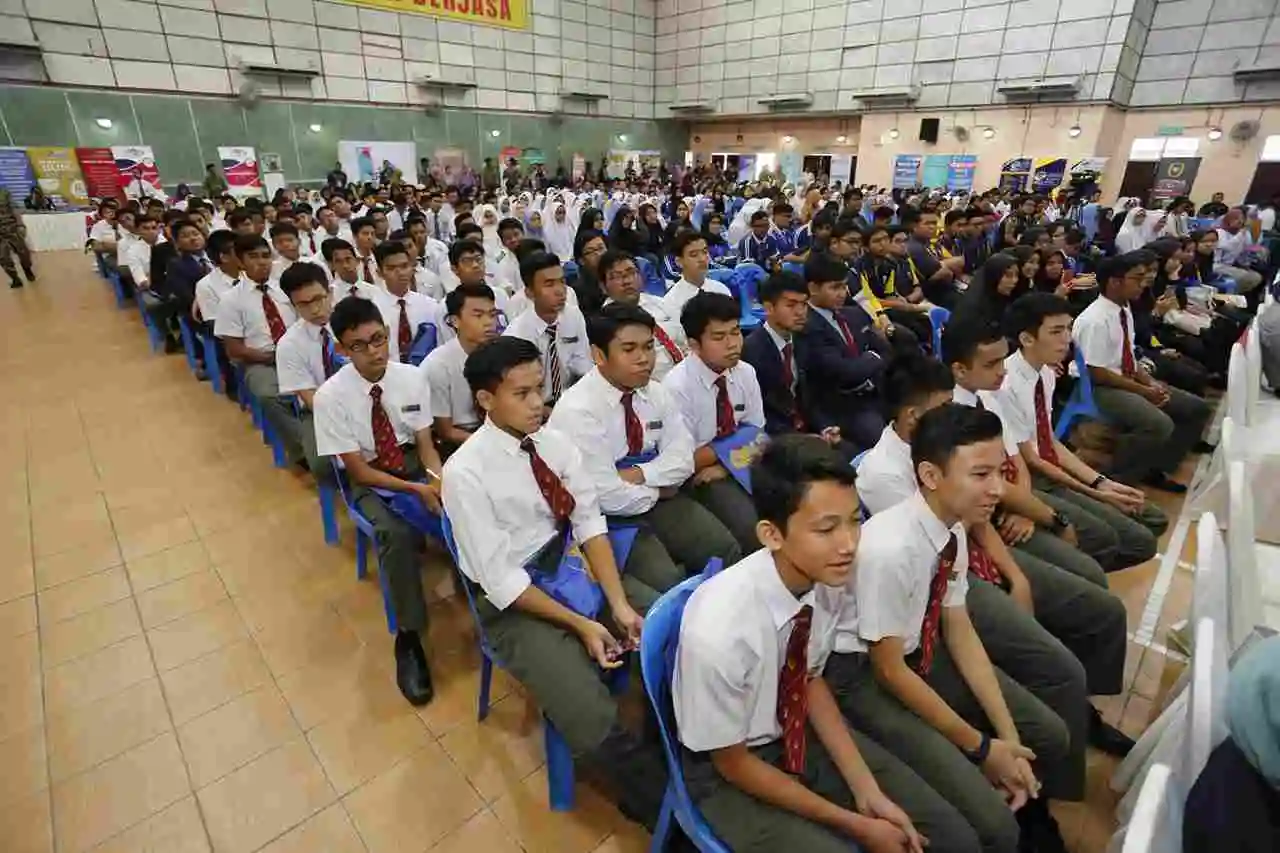
UPNM provides a disciplined university experience linking education, character development, leadership training, physical activity and student resources. Its unique defence-oriented environment allows students to engage with sports, cultural activities and other co-curricular programs, fostering skills and strengths such as discipline, teamwork and leadership.
Residential Life
Student accommodation at UPNM is available at several residential colleges, such as Kolej Tuah, Kolej Lekir, Lekiu & Mahsuri, Kolej Jebat, Kolej Kasturi and Kolej Srikandi. Facilities for students to live in include access to Wi-Fi, self-service laundry, groceries, meeting rooms, indoor activity rooms, and other student amenities.
For cadet officers, the accommodation and meals are included under the fully sponsored programme, as part of the Malaysian Armed Forces, depending on the arrangement of the programme.
Clubs, Sports & Activities
Students can participate in a number of activities that promote personal growth, teamwork, as well as campus involvement, such as:
- Sports & Recreation: Football, volleyball, tennis, netball, swimming, running and various other sporting activities.
- Arts & Culture: Activities that foster cultural expression, identity and unity amongst the university community.
- Leadership & Development: Programs on character building, leadership and student development.
- Defence and Co-curricular Activities: Some students are able to participate in defence training and in organisations such as PALAPES.
Student Well-Being
UPNM provides support services and facilities intended to help boost students’ academic, physical and personal well-being, including:
- Counselling and advisory services
- Healthcare via the UPNM Health Centre
- Sports and fitness facilities
- Developmental and welfare support for students
- Alumni and career services
International Student Support
UPNM has also well established internationally-students support services with regard to registration and general information, immigration and visa, health, accommodation, cultural and educational adjustment, and support programs. This allows students coming from abroad to have institutional support during their career.
The academic experience, sporting events, culture, leadership training, and student support all happen within the UPNM campus situated in a unique defence atmosphere.
Why Choose the National Defence University of Malaysia (UPNM)
- Specialised Defence & Security Focus – A public university dedicated to education, research and training in defence and national security.
- Distinctive Military-Academic Environment – Combines civilian students, PALAPES students and ALK Cadet Officers.
- Academic + Defence Development – Integrates academic learning with leadership, professional development and practical training.
- Strong Research Focus – Research spans defence technology, cybersecurity, maritime studies, strategic studies and related fields.
- Modern Facilities – Facilities support academic learning, practical training, sports and specialised research.
- Industry & Government Connections – Collaborates with government agencies, defence organisations, industry and international institutions.
- Wide Career Pathways – Offers programmes in defence, engineering, AI, computer science, medicine, business, international relations, and other fields.
- Financial Support – Eligible students can access government financing, scholarships and university-coordinated financial assistance.
Admission Process for International Students
UPNM's admission requirements vary according to the programme and level of study. International applicants should first check the specific academic requirements for their chosen programme before submitting an application.
Eligibility Requirements
Undergraduate Eligibility Requirements
- Academic qualification: Applicants must hold a recognised qualification such as STPM, Matriculation/Foundation, STAM, Diploma or an equivalent qualification, depending on the programme.
- Minimum academic results: The required CGPA/grades vary by programme. For example, some bachelor's programmes specify a minimum STPM CGPA of 2.33, together with required grades in relevant subjects.
- Subject requirements: Certain programmes require specific subjects such as Mathematics, Physics, Chemistry, Biology, Economics, Accounting or other relevant subjects, depending on the degree.
- Health screening: Some programmes require applicants to pass a health screening.
- Interview: Certain UPNM programmes require applicants to pass an interview as part of admission.
- Programme-specific conditions: Additional conditions may be imposed by UPNM's Senate for particular programmes.
- APEL.A pathway: UPNM also offers APEL.A Level 6 as an alternative access route to bachelor's degree programmes for eligible applicants with relevant prior learning/experience.
Master's Degree – Research Mode
- Bachelor's degree in the relevant or related field with a minimum CGPA of 2.75.
- CGPA of 2.50–2.74 may be accepted subject to rigorous internal assessment.
- CGPA of 2.00–2.49 may be considered with at least 5 years of relevant work experience and rigorous internal assessment.
- Applicants without a relevant qualification or work experience may need to complete prerequisite courses determined by the Senate.
- Applicants may also qualify through APEL A (APEL T-7) with relevant work experience.
Master's Degree – Coursework
- Bachelor's degree in the relevant or related field with a minimum CGPA of 2.50.
- CGPA of 2.00–2.49 may be accepted subject to rigorous internal assessment.
- Applicants without a relevant qualification or work experience may be required to complete prerequisite courses.
- Other qualifications recognised through APEL Level 7 (APEL T-7) may also be considered.
PhD – Research Mode
- Master's degree in the relevant or related field from UPNM or another university recognised by the UPNM Senate.
- Other qualifications recognised by the Senate or MQA as equivalent to a master's degree may also be accepted.
- Applicants without a related qualification or relevant work experience may need to complete prerequisite courses.
- For PhD in Computer Science, applicants must have a master's degree or equivalent and must have completed at least one previous degree (bachelor's or master's) in computing or a related field.
General English Requirements for International Applicants
UPNM's graduate regulations specify the following minimum English proficiency for foreign candidates:
- IELTS: 5.5
- TOEFL Paper-Based: 550
- TOEFL Internet-Based: 80
- TOEFL Computer-Based: 213
Application Process for Undergraduate Programmes
- Choose a programme – UPNM offers Diploma and Bachelor's Degree programmes across areas such as Defence Science & Technology, Management & Defence, Engineering, Defence Health & Medicine, Computer Science, Defence Fitness and Islamic Defence Studies.
- Check programme-specific requirements – Entry requirements depend on the selected diploma or bachelor's programme.
- Apply through UPUOnline – UPNM states that applications for its academic programmes are submitted through UPUOnline.
- Check interview requirements – Where applicable, applicants can check interview schedules through UPNM's e-Offer System.
- Check admission results – UPNM's e-Offer system is also used to check admission offers/results.
- International Student Pass – After receiving an offer, international students can apply for the Malaysian Student Pass through Education Malaysia or their institution. UPNM states that online Student Visa applications are only permitted while the student is outside Malaysia.
- Contact UPNM for international admission – UPNM's Centre for Academic and International Networking lists pjaa@upnm.edu.my and +603-9051 3400 for international enquiries.
Application Process for Postgraduate Programmes
- Choose your postgraduate programme – UPNM offers master's and doctoral programmes through research and coursework modes.
- Check the programme-specific entry requirements – Confirm your academic qualification, CGPA and any additional programme requirements.
- Meet the English requirement – Foreign applicants should meet the applicable IELTS or TOEFL requirement.
- Submit your application – Apply through UPNM's postgraduate admission process.
- Provide supporting documents – Submit the academic and other documents requested by the Centre for Graduate Studies.
- Undergo assessment where applicable – Applicants admitted through lower-CGPA routes may be subject to rigorous internal assessment.
- Receive the admission decision/offer – Successful applicants proceed with UPNM's enrolment requirements.
- Complete international student/Student Pass procedures after admission, where applicable.
Career Prospects & Alumni
UPNM supports students and graduates through career counselling, industry collaboration, internships, career fairs and alumni networking.
Career Support
- Career Counselling & Development – UPNM provides counselling, career development, graduate employability support and industry collaboration through its student and alumni services.
- Career Fairs & Internships – UPNM's 2025 Career Fair & Internship Day connected students and graduates with industries for employment and industrial-training opportunities.
- 300+ Opportunities – UPNM's Faculty of Engineering reported more than 300 employment and internship opportunities at its 2025 Career Fair & Internship Day in engineering and technology.
- 500+ Vacancies – UPNM's 2024 On-Campus Interview programme provided more than 500 job vacancies and internship opportunities across various industry sectors.
- Industry Connections – Career events provide opportunities for students and graduates to meet employers, submit resumes and participate in interviews.
Career Fields
UPNM's official career information identifies opportunities across fields including:
-
Malaysian Armed Forces
-
Engineering
-
Banking Systems Analysis
-
Software & Computer Systems
-
Telecommunications
-
Project Management
-
Technology Marketing
-
Database Management & Analysis
-
ICT & Entrepreneurship
-
Consulting
-
Strategic Planning
-
Application Engineering
Alumni Network
UPNM's alumni network supports professional connections and graduate development through:
- Professional Networking – Alumni connections can facilitate career opportunities and collaborations.
- Employment Connections – UPNM has reported alumni involvement in providing employment opportunities to final-year civilian students and graduates.
- Graduate Development – Alumni contribute to professional and institutional activities that support current students and graduates.
Examples of Alumni Careers
UPNM's official alumni profiles showcase graduates working in a range of professional positions, including:
- Group Managing Director
- Private Secretary to a Deputy Minister
- Senior Lecturer
- QA/QC & Safety Manager
These examples illustrate the range of professional roles represented within UPNM's alumni community.
Living in Kuala Lumpur, Malaysia
UPNM is located in Kuala Lumpur, Malaysia’s capital city, giving students access to a multicultural urban environment, modern amenities and a wide range of food, entertainment and recreational options.
Climate & Weather
Kuala Lumpur has a tropical climate throughout the year, with warm temperatures, high humidity and frequent rainfall. Students can generally expect:
- Warm weather throughout the year
- Frequent short rain showers and thunderstorms
- High humidity
- No traditional winter season
- Plenty of sunshine between periods of rain
Food & Dining
Kuala Lumpur is known for its diverse food culture, making it easy for international students to explore different cuisines. Students can find:
- Malaysian favourites such as nasi lemak, roti canai and laksa
- Chinese, Indian, Malay and Southeast Asian cuisines
- Halal food options across the city
- Vegetarian and international food choices
- Affordable meals at local restaurants, food courts and markets
Culture & Lifestyle
Living in Kuala Lumpur offers students exposure to Malaysia's multicultural society, with Malay, Chinese, Indian and other communities contributing to the city's cultural landscape.
Students can experience:
- Cultural festivals and celebrations
- Local markets and shopping districts
- Museums, galleries and historical attractions
- Modern malls and entertainment venues
- Parks and recreational spaces
- A diverse international community
Getting Around
Kuala Lumpur has an extensive public transportation network, including MRT, LRT, monorail, buses and commuter rail services. Students can also use taxis and ride-hailing services for convenient travel around the city.
Student-Friendly City
For international students, Kuala Lumpur combines urban convenience with access to education, healthcare, shopping, dining and recreational facilities. Its multicultural environment also provides opportunities to experience Malaysian traditions while meeting people from different backgrounds.
Conclusion
The National Defence University of Malaysia (UPNM) offers a distinctive higher-education experience that combines academic learning with a strong focus on defence, security, leadership and student development. With undergraduate and postgraduate programmes across areas such as engineering, technology, management, defence studies and security, students can choose programmes aligned with different academic and career interests.
For international students, UPNM also provides the opportunity to experience life in Kuala Lumpur, a multicultural city known for its diverse food, traditions, modern infrastructure and tropical climate. Student support services, residential facilities, career development activities, industry engagement and alumni networks further contribute to the university experience.
UPNM provides career development opportunities through internships, career fairs, industry connections and professional networking. Graduates can pursue career pathways across defence and security, engineering, technology, management, public-sector organisations and private industries, depending on their qualifications and chosen field.
Before applying, prospective students should review their preferred programme, academic eligibility, tuition fees, available financial assistance and application requirements. International applicants should also check the relevant student-pass and visa procedures.
If you are considering studying in Malaysia, explore UPNM’s programmes and admission requirements to find a study pathway that matches your academic background and future career goals.
Frequently Asked Questions
1. What makes the National Defence University of Malaysia different from other Malaysian universities?
The National Defence University of Malaysia (UPNM) has a distinctive focus on defence and national security while combining academic education with leadership and professional development. Its student community includes civilian students, PALAPES students and Cadet Officers, creating a different campus environment from a conventional university.
2. Do all UPNM students have to undergo military training?
No. The requirements depend on the student's status and programme. UPNM's official information distinguishes between Cadet Officers, civilian students and PALAPES participants, with military or co-curricular training requirements varying accordingly.
3. What type of student is best suited to studying at UPNM?
UPNM's official FAQ highlights qualities such as discipline, physical and academic balance, sports participation and good time management. Students should also be prepared to balance academic responsibilities with any applicable military or co-curricular activities.
4. Can civilian students study at the National Defence University of Malaysia?
Yes. UPNM has both civilian students and military-related student categories. Civilian students can pursue academic programmes without being Cadet Officers, although particular programmes may include applicable co-curricular or PALAPES requirements.
5. Does UPNM offer programmes outside defence and military studies?
Yes. Although defence and security are central to UPNM's academic identity, the university also offers programmes in areas such as engineering, computer science, artificial intelligence, maritime technology, management, international relations and medicine. The exact programmes available depend on the current academic intake.
6. Where is the National Defence University of Malaysia located?
UPNM is located at Kem Sungai Besi, Kuala Lumpur, Malaysia. Its campus brings together academic facilities, residential colleges, sports facilities, healthcare services and specialised training facilities.
7. Can international students study at UPNM as civilian students?
UPNM has historically promoted opportunities for overseas civilian students at both undergraduate and postgraduate levels. International applicants should check the current programme-specific admission requirements and international student procedures before applying.
8. What is the academic and military balance like at UPNM?
UPNM combines conventional university education with activities related to defence, leadership, physical development and professional training. The balance differs according to whether a student is a civilian, PALAPES participant or Cadet Officer and according to the selected programme.
9. Does UPNM provide facilities for practical and specialised learning?
Yes. UPNM's facilities include specialised academic and training resources, and individual programmes may provide access to laboratories, simulators, sports facilities and other practical-learning environments. Engineering programmes, for example, include discipline-specific laboratory and practical components.
10. How can students check the latest UPNM course fee before applying?
The UPNM course fee depends on factors such as the programme, study level, student category, and applicable university charges. Prospective students should check the latest official fee schedule for their specific programme rather than relying on a general university-wide figure. UPNM also provides an official student payment system for university-related fees.