


Table of Contents
About Universiti Malaysia Terengganu
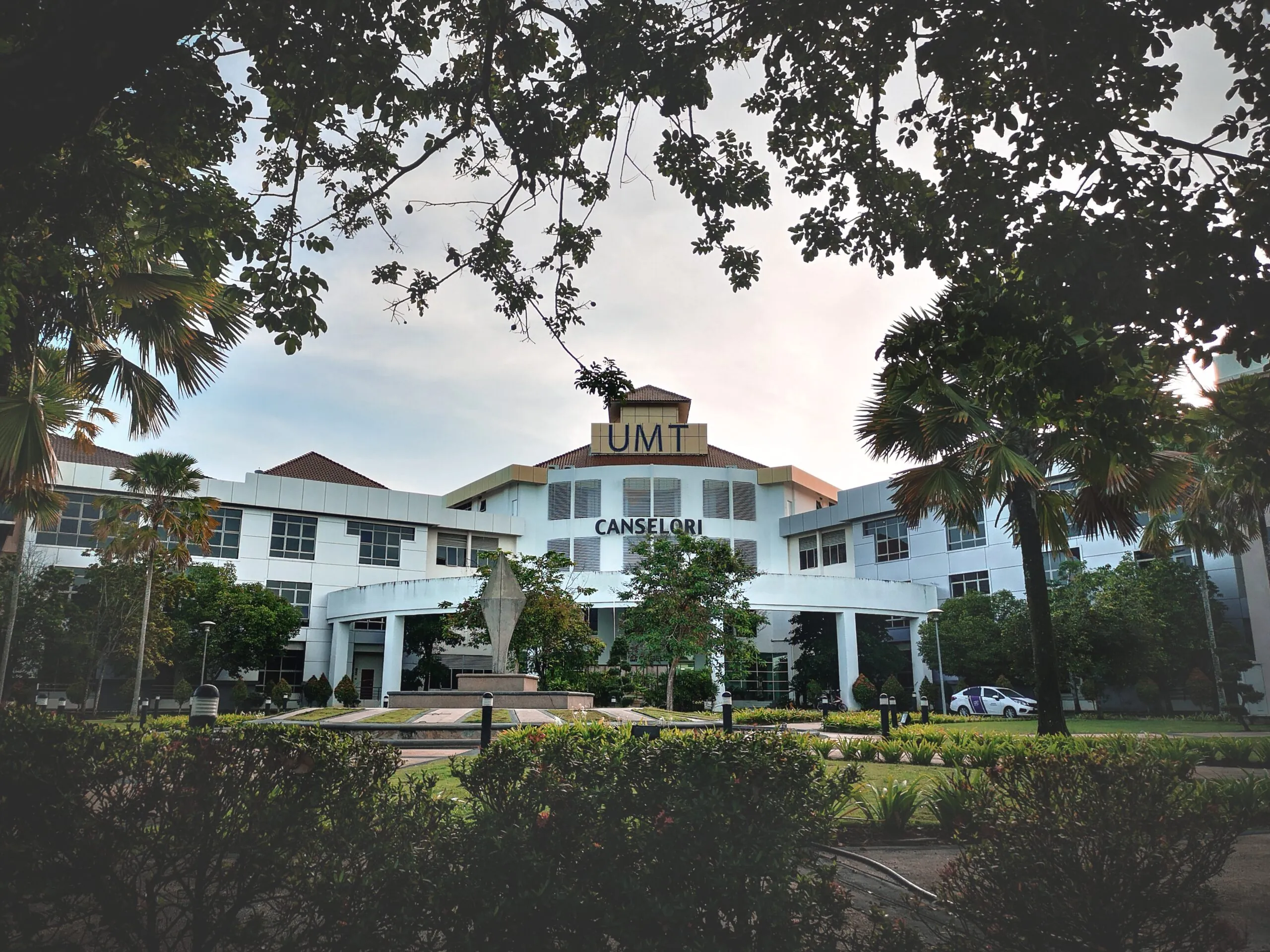
Universiti Malaysia Terengganu (UMT) is one of the best public universities in Malaysia, specializing in marine science, environmental studies, oceanography, fisheries, and applied sciences. Located in Kuala Nerus, Terengganu, UMT offers a modern coastal campus that makes it a unique choice for international students who wish to study in Malaysia in a nature-rich environment.
Universiti Malaysia Terengganu (UMT) is internationally recognized with strong rankings, including #801–850 in the QS World University Rankings 2026 and #160 in the QS Asia University Rankings 2026, placing UMT among the top 10% of universities in Asia. UMT is also ranked #1 in Malaysia for Marine and Freshwater Biology, highlighting its strength in marine and environmental sciences.
Quick Facts
• Type: Public research university
• Location: Kuala Nerus, Terengganu
• Strengths: Marine science, fisheries, environmental science, biotechnology, engineering
• Ideal For: Students seeking a coastal learning environment and research-based education
History & Background
Established in 1979 as a fisheries and marine science center under Universiti Pertanian Malaysia, UMT gained full university status in 2007. The university was founded to support Malaysia’s maritime development and environmental sustainability through high-quality scientific research and academic programmes.
In June 1996, the centre developed into a branch campus known as Universiti Pertanian Malaysia Terengganu (UPMT) after the Faculty of Fisheries and Marine Science was transferred from Serdang to Kuala Terengganu. During this period, the Faculty of Applied Sciences and Technology, Faculty of Science and Professional Literature, and Matriculation Centre were also established, expanding the institution's academic scope beyond fisheries and marine studies.
In 1999, the Malaysian Cabinet approved the establishment of Terengganu University College (KUT) as an associate campus of Universiti Pertanian Malaysia.
KUT gained autonomy in 2001 and was subsequently renamed Kolej Universiti Sains dan Teknologi Malaysia (KUSTEM). On 1 February 2007, KUSTEM was granted full university status and officially became Universiti Malaysia Terengganu, the institution known today.
UMT’s vision emphasizes innovation, ocean sustainability, scientific advancement, and global collaboration. Over time, UMT has expanded into engineering, business, humanities, and technology while maintaining its strong focus on marine-based research.
Campus Environment & Facilities
UMT’s scenic coastal campus overlooks the South China Sea and provides state-of-the-art academic and research facilities. Its environment allows students to experience hands-on learning through marine labs, ocean vessels, field research stations, and modern classrooms.
Facilities include digital libraries, computer labs, aquaculture centers, marine science laboratories, health clinics, dining halls, and student residences. International students benefit from visa support, academic advising, and orientation services.
Campus Highlights
- Perpustakaan Sultanah Nur Zahirah (PSNZ): Provides print, digital, and multimedia resources to support students’ learning, teaching, and research activities.
- RV Discovery Research Vessel: A national-class research vessel used for scientific research and cruises focusing on marine ecosystems, fisheries, oceanography, environmental health, and climate-related studies.
- Pulau Bidong Marine Research Station: UMT’s marine research facility on Pulau Bidong features a dive centre, accommodation, dining facilities, and research infrastructure for coral restoration, biodiversity, ecology, fisheries, underwater archaeology, and other marine studies.
- Marine & Research Facilities: Specialized laboratories and research facilities support practical learning and research in marine science, fisheries, aquaculture, biotechnology, oceanography, and environmental sciences.
- Sports & Recreation: Kompleks Sukan Tengku Muhammad Ismail includes the UMT Stadium, swimming pool, Indoor Sports Complex, mini gymnasium, archery range, lawn bowling field, Squash High-Performance Centre, and various sports courts.
- Healthcare Services: The UMT Health Centre provides outpatient and emergency services along with dental care, pharmacy, physiotherapy, and medical laboratory facilities.
- Student Well-being: The Student Counselling and Well-being Centre provides counselling and support services to help students manage personal, academic, and well-being concerns.
- Residential & Dining Facilities: UMT provides student accommodation and dining facilities that support residential campus life and everyday student needs.
- ICT & Learning Facilities: Computer and digital learning facilities support academic work, research, and technology-based learning across the university.
- International Student Support: International students receive assistance with areas such as visa and immigration procedures, student welfare, orientation, and adjustment to university life.
Faculties & Academic Programmes
UMT specializes in marine, environmental, and aquatic sciences, but also provides diverse programmes in technology, business, and social sciences.
UMT emphasizes experiential learning, research-driven coursework, and global industry integration.
| Faculty | Academic Focus |
|---|---|
| Faculty of Science & Marine Environment | Marine science, marine biology, marine geosciences, biological sciences, chemical sciences, environmental chemistry, biodiversity and conservation |
| Faculty of Fisheries Sciences & Aquaculture | Fisheries, aquaculture, and aquatic sciences |
| Faculty of Food Sciences & Agrotechnology | Food technology, food service and nutrition, agrotechnology, crop science, and agro-processing |
| Faculty of Maritime Studies | Maritime management, maritime operations, nautical science, and maritime transportation |
| Faculty of Ocean Engineering Technology | Maritime technology, naval architecture, environmental technology, electronics and instrumentation, renewable energy, and electrical energy and power |
| Faculty of Business, Economics & Social Development | Accounting, finance, economics, marketing, management, tourism, policy studies, and counselling |
| Faculty of Computer Science & Mathematics | Software engineering, mobile computing, maritime informatics, data analytics, applied mathematics, and financial mathematics |
| Centre for Fundamental & Continuing Education | Foundation and continuing education programmes |
Estimated Fees at Universiti Malaysia Terenggan
| Study Level | Fee Information for International Students |
|---|---|
| Undergraduate | Approximately USD 5,590–9,170 total for the bachelor's programmes listed by UMT. |
| Diploma | USD 2,430 total for Diploma in Fisheries. |
| Foundation in STEM | USD 3,000 total. |
| Master's – Research | Fees vary by faculty/programme; for example, the Faculty of Science & Marine Environment lists USD 1,038.80 for the first semester + USD 742 for subsequent semesters, plus thesis examination fee. |
| PhD – Research | Programme-specific; the same faculty lists USD 1,272 for the first semester + USD 742 for subsequent semesters, plus thesis examination fee. |
| Master's – Coursework | Programme-specific; official UMT schedules show different fees depending on the programme. |
Additional Costs
International students should also budget for costs outside the tuition fee, including:
- Registration fee: USD 190 for undergraduate students, charged in the first semester according to UMT's published schedule.
- Accommodation: UMT's published undergraduate rates are USD 300/semester for double occupancy, USD 240 for triple occupancy, and USD 180 for four-person occupancy.
- Medical examination: International students must complete the required medical check after obtaining the relevant visa clearance. UMT's registration material lists RM250 for the medical check at the UMT Medical Centre.
- Insurance: UMT's registration material lists RM505 for insurance.
- Postgraduate application fee: International postgraduate applicants pay a non-refundable USD 26.50 application fee.
Scholarships & Financial Support
UMT offers scholarships for international students, including merit-based awards, fee waivers, and postgraduate research funding. Students with excellent academic performance or research potential may receive partial or full financial support.
Malaysia’s low living cost combined with UMT’s scholarship options makes it an affordable and attractive destination for international education.
- UMT Vice-Chancellor Scholarship (UMTVC): Tuition-fee waivers for eligible new postgraduate students.
- International Student Support: UMT allocates scholarship funding to attract and support international postgraduate students in selected Science and Social Science programmes.
- Master’s & PhD Research Support: Eligible postgraduate research students can receive assistance for approved research-related expenses.
- Tuition Fee Discounts: Eligible students may receive discounts on postgraduate tuition fees, depending on the programme and scholarship scheme.
- UMT Alumni Discount: Financial benefits are available to eligible UMT alumni continuing their studies.
- Bingkas Kasih: Financial assistance is available to eligible students to help with initial tuition or registration expenses.
- Zakat & Welfare Assistance: UMT provides selected forms of educational and welfare support to eligible students.
- Research Assistance: Postgraduate students may receive support for expenses such as laboratory facilities, equipment usage, and research analysis.
Student Life & International Community
UMT provides a dynamic student lifestyle shaped by its coastal environment, multicultural community, and active involvement in academic and recreational activities. Students can join cultural clubs, sports teams, research groups, debate societies, and marine exploration activities.
On-campus residences offer safe and comfortable living equipped with dining facilities, recreational spaces, and study lounges. Counseling, health services, and student support programs ensure a positive transition for international learners.
- Vibrant Campus Life: Students can participate in clubs, events, sports, volunteering, and other student-led activities alongside their academic programmes.
- Leadership & Talent Development: UMT’s Student Affairs and Alumni Division conducts initiatives such as Student Talent Development Camp (BAKAT) and Student Leadership Camp (KEMSIS) to develop leadership, innovation, employability, and professional skills.
- Sports & Recreation: The Tengku Muhammad Ismail Sports Complex includes an athletics stadium, swimming pool, indoor sports complex, mini gymnasium, archery range, lawn bowling field, squash facilities, and various courts.
- Residential Life: UMT’s residential colleges provide accommodation and facilities designed to create a comfortable and safe living environment. Students have access to cafeterias, halls, reading rooms, a mini gymnasium, meeting spaces, and recreational areas.
- Accommodation for International Students: UMT’s Residensi Tembesu Off-Campus Residential College has designated units for international students. These units include bedrooms with air conditioning and bathrooms with water heaters.
- Student Transition Support: UMT conducts residential-college transition programmes for new students covering campus orientation, safety, cleanliness, community interaction, recreational activities, and counselling.
- Health Services: The UMT Health Centre provides outpatient, emergency, dental, pharmacy, physiotherapy, and medical laboratory services for the campus community.
- Counselling & Wellbeing: The Student Counselling and Well-being Centre (PKKM) provides individual and group counselling, guidance, consultation, psychological assessments, and therapies including art, sand, play, and music therapy.
- Student Welfare: UMT’s Student Affairs and Alumni Division supports student welfare, financial assistance, safety, leadership development, volunteerism, and residential services.
- Coastal Campus Experience: UMT is located along the coastline, giving students a distinctive campus environment connected to the university’s strengths in marine and environmental sciences.
- International Exposure: UMT also provides opportunities for students to participate in international programmes and activities. For example, its UNISAIL 2026 international sailing championship brought together student teams from Malaysia, Singapore, and Taiwan.
Why Choose This University?
UMT is ideal for students interested in marine sciences, environmental studies, sustainable development, and technological innovation.
- QS World University Rankings 2027: Ranked #701–710 globally.
- QS Asia University Rankings 2026: Ranked #160 in Asia, improving from #195 in the previous edition.
- Strong Marine & Environmental Focus: Specialised academic and research strengths in marine, aquatic, fisheries, and environmental sciences.
- Coastal Learning Environment: Its location in Terengganu complements UMT’s focus on marine and aquatic studies.
- Research-Oriented University: Opportunities to engage with research in areas such as ocean sciences, fisheries, aquaculture, biodiversity, and sustainability.
- Specialised Facilities: Access to facilities and research infrastructure supporting marine and aquatic science education.
- International Student Support: Accommodation, healthcare, counselling, welfare, and other student services are available to support international learners.
- Sustainability Focus: Academic and research activities address marine conservation, environmental sustainability, and responsible use of aquatic resources.
Admission Process for International Students
Universiti Malaysia Terengganu (UMT) has separate application routes for international undergraduate and postgraduate applicants. Applicants must satisfy the general admission requirements as well as the specific academic and English-language requirements of their chosen programme.
Undergraduate Admission Requirements
International applicants generally need:
- Academic qualification: A Senior High School/Senior Secondary School certificate or another recognised qualification equivalent to at least 11–12 years of schooling.
- Alternative qualification: GCE A-Level or another qualification recognised as equivalent by the UMT Senate may also be accepted.
- English proficiency: Programme requirements can vary. For example, some UMT bachelor's programmes specify IELTS 5.5, TOEFL 550, or MUET Band 3.
- Programme-specific subjects: Applicants must also meet the prerequisite subjects and academic requirements specified for their chosen bachelor's programme.
Documents Required for Undergraduate Application
Applicants should prepare:
- Valid international passport
- Senior high school/senior secondary certificate
- Academic transcripts/results
- Certificate or qualification documents for any diploma/A-Level or equivalent qualification
- English-language test certificate, where required
- Passport-size photographs
- Other documents requested for the specific programme
UMT's international undergraduate application form specifically requires academic-achievement information and certified copies of certificates/diplomas/degrees and transcripts.
Postgraduate Admission Requirements
For postgraduate applicants, the requirements depend on whether the student is applying for a Master's or PhD and whether the programme is coursework or research.
Master's applicants:
- A relevant Bachelor's degree with a minimum CGPA of 2.75, or an equivalent qualification recognised by the UMT Senate.
- Applicants with a CGPA below 2.75 may still be considered if they have relevant and adequate research or work experience recognised by the Senate.
PhD applicants:
A recognised Master's degree, or equivalent qualification; or
A recognised qualification with adequate research/work experience, subject to UMT requirements.
Outstanding UMT Master's students may be eligible for conversion to PhD.
A First Class Bachelor's degree or equivalent may also provide a route to PhD admission, subject to UMT's requirements.
Documents Required for International Postgraduate Applicants
UMT's current postgraduate admission document specifies the following:
- Completed online application form
- Proof of payment of the non-refundable application fee of USD 26.50 for international applicants
- Copy of international passport
- Academic transcripts
- Relevant degree certificate
- Research proposal/project proposal for applicants applying under a research structure
- Academic referee report or recommendation letter
- Financial statement, bank statement, bank guarantee, or sponsorship letter
- English-language proficiency evidence
- Other relevant supporting documents, where applicable.
For international postgraduate applicants, UMT's admission procedure also specifies documentary evidence showing the ability to cover programme-related expenses, such as a bank guarantee or sponsorship letter of MYR 30,000 for Master's applicants or MYR 48,000 for PhD applicants.
English-Language Requirement
English requirements depend on the programme. UMT's postgraduate regulations also provide exemptions for applicants from countries where English is an official language, with the exemption list subject to revision by the university. Applicants who do not initially meet the prescribed English requirement may receive a conditional offer and must fulfil the requirement within a maximum of one year from the offer date.
Step-by-Step Application Process
1. Choose your programme
Check the UMT programme list and confirm the academic, subject, and English requirements for your specific course.
2. Prepare your documents
Prepare your passport, academic certificates and transcripts, English test result, photographs, and any programme-specific documents. Research applicants should also prepare their research proposal.
3. Submit the online application
For undergraduate international admission, UMT provides an online international-student application route.
For postgraduate admission, applications are submitted through UMT's postgraduate online application system.
4. Pay the application fee
For postgraduate international applicants, the current stated processing fee is USD 26.50 and is non-refundable.
5. Upload supporting documents
Upload the required academic, identification, English-language, financial, and programme-specific documents.
6. Academic assessment
UMT reviews the application against the admission requirements of the selected programme.
7. Receive the offer
Successful applicants receive an offer from UMT and must follow the instructions provided in the offer letter.
8. Complete international-student and visa procedures
After admission, international students must complete the required immigration and university procedures before travelling to Malaysia.
9. Arrive and register at UMT
International students must complete the required registration procedures. At postgraduate level, UMT states that new international students must register offline and bring their original passport, offer letter, academic certificates/transcripts, proof of tuition-fee payment or sponsorship, two passport-size photographs, and the required clearance form.
10. Complete medical and insurance requirements
For postgraduate international registration, UMT states that students must obtain clearance from the International Centre and complete the required insurance and medical-check procedures.
Living in Kuala Terengganu, Malaysia
Kuala Terengganu is known for its serene environment, rich culture, affordable living, and beautiful coastal landscapes. Students enjoy easy access to beaches, local markets, public transportation, and cultural attractions.
The cost of living is moderate, making the region ideal for international students seeking a peaceful academic setting with natural beauty and cultural diversity.
- Climate & Weather: Kuala Terengganu has a tropical climate with warm temperatures, high humidity, and rainfall throughout the year. Malaysia’s east coast experiences stronger seasonal rainfall during the Northeast Monsoon, particularly from November to January.
- Temperature: Temperatures remain fairly consistent throughout the year. During the Northeast Monsoon, daytime temperatures in Kuala Terengganu often remain below 32°C and may stay below 27°C on some days. Night-time temperatures are typically around 21°C–24°C during this period.
- Rainfall: November and December are among the wetter months in Kuala Terengganu. METMalaysia's long-range climate outlook indicates approximately 590–880 mm of rainfall in November and 460–690 mm in December for Kuala Nerus/Kuala Terengganu.
- Coastal Lifestyle: Students can enjoy beaches, coastal areas, local food, markets, and the relaxed atmosphere of Terengganu.
- Affordable Living: Kuala Terengganu generally provides a more manageable student lifestyle than Malaysia's larger metropolitan centres, particularly for everyday food and accommodation expenses.
- Food & Local Markets: Students can experience Terengganu's local cuisine, traditional foods, markets, and other everyday Malaysian dining options.
- Culture & Community: Living in Kuala Terengganu gives international students an opportunity to experience local Malay culture, traditions, crafts, and community life.
- Transport & Accessibility: The city provides access to local transportation and essential services, while UMT's campus provides students with facilities and services for their academic and residential needs.
- Weekend Activities: Students can explore nearby beaches, islands, cultural attractions, shopping areas, and other destinations across Terengganu during their free time.
Conclusion
Universiti Malaysia Terengganu is an excellent choice for international students seeking a high-quality public university in Malaysia with strong expertise in marine science, environmental studies, and applied research. Its coastal campus, modern facilities, affordable fees, and growing global rankings create a balanced and rewarding academic experience.
With supportive international student services, scholarship opportunities, and strong career prospects in sustainability-focused fields, UMT provides a practical and future-oriented pathway for students who want to study in Malaysia and build globally relevant careers.
Frequently Asked Questions About Universiti Malaysia Terengganu
1. Is Universiti Malaysia Terengganu a public or private university?
Universiti Malaysia Terengganu (UMT) is a public research university in Malaysia. It was established as a fisheries and marine science centre and later developed into a comprehensive university while retaining its strong focus on marine, aquatic, environmental, and related sciences.
2. What is Universiti Malaysia Terengganu best known for?
Universiti Malaysia Terengganu is particularly known for marine science, fisheries, aquaculture, oceanography, environmental studies, and aquatic research. Its coastal location and specialised research infrastructure provide opportunities for students to study marine and environmental subjects in an environment closely connected to their field.
3. Where is UMT located in Malaysia?
UMT is located in Kuala Nerus, Terengganu, on the east coast of Peninsular Malaysia. Its coastal location near the South China Sea gives the university a distinctive setting for marine, fisheries, oceanographic, and environmental education and research.
4. What makes UMT Malaysia different from other Malaysian universities?
UMT Malaysia has a distinctive academic identity built around marine and aquatic sciences while also offering programmes in areas such as business, computing, mathematics, food sciences, engineering, and maritime studies. Its coastal setting and specialised marine research infrastructure further distinguish it from many general public universities.
5. Does UMT offer opportunities for marine research?
Yes, UMT provides research opportunities in areas related to marine ecosystems, fisheries, oceanography, biodiversity, aquaculture, environmental science, and sustainability. Facilities such as the RV Discovery research vessel and Pulau Bidong Marine Research Station support field-based and marine research activities.
6. Can international students pursue postgraduate research at UMT?
Yes, international students can apply for Master's and PhD programmes at UMT, including research-based study. Postgraduate applicants must meet the academic, English-language, documentation, and other requirements specified for their chosen programme.
7. Does Universiti Malaysia Terengganu provide practical learning opportunities?
Yes, UMT's academic environment supports practical and experiential learning, particularly in marine and environmental disciplines. Depending on the programme, students may have opportunities to use specialised laboratories, research facilities, field locations, and marine research infrastructure as part of their academic or research activities.
8. What research areas can students explore at UMT Malaysia?
Students at UMT Malaysia can explore research areas including marine biology, oceanography, fisheries, aquaculture, biodiversity, environmental science, marine conservation, maritime studies, and sustainability. The university also has academic and research activity in technology, engineering, computing, business, and related disciplines.
9. Does UMT have facilities for students interested in maritime studies?
Yes, UMT has dedicated academic strengths and facilities related to maritime studies, maritime operations, nautical science, maritime transportation, and ocean engineering technology. These areas complement the university's broader marine and coastal focus.
10. Is Universiti Malaysia Terengganu suitable for students interested in sustainability?
Yes. Universiti Malaysia Terengganu is particularly relevant for students interested in sustainability, conservation, marine resources, environmental management, and responsible use of aquatic ecosystems. Its academic and research activities address issues connected with oceans, aquatic resources, biodiversity, and environmental sustainability.