
Table of Contents
About Universiti Kebangsaan Malaysia
Universiti Kebangsaan Malaysia (UKM), also known as the National University of Malaysia, is one of the best public universities in Malaysia and a global leader in research, innovation, and academic excellence. Located in Bangi, Selangor, with medical and specialist campuses in Kuala Lumpur, UKM attracts thousands of international students studying in Malaysia each year.
Recognized globally, UKM holds a QS World Ranking of 126, QS Asia Ranking of 24, and Times Higher Education (THE) Ranking of 301–350. In the QS World University Rankings 2026, UKM Malaysia was ranked 126th globally and second in Malaysia, while its THE World University Rankings 2026 position was 301–350.
It offers a multicultural environment, modern facilities, and a wide range of academic programmes designed for international learners seeking high-quality education in Malaysia.
Universiti Kebangsaan Malaysia currently promotes more than 200 programmes across pre-university, undergraduate, postgraduate, and lifelong-learning levels.
Quick Facts
• Type: Public research university
• Location: Bangi, Selangor & Kuala Lumpur
• Known For: Engineering, medicine, business, social sciences, science & technology
• Ideal For: International students Malaysia seeking globally ranked education
History & Background
Universiti Kebangsaan Malaysia was founded in 1970 with a mission to advance national identity, knowledge, and research leadership. Its vision emphasizes inclusivity, social responsibility, and the cultivation of global citizens who contribute meaningfully to society.
The idea of establishing a national university can be traced back to 1903, while efforts gained renewed momentum after independence. In 1968, Malay scholars formed a sponsoring committee to help turn the vision of a national university into reality.
UKM Malaysia began its first operations at Lembah Pantai, Kuala Lumpur, with 192 undergraduate students and two postgraduate students enrolled across three founding faculties: the Faculty of Science, Faculty of Arts, and Faculty of Islamic Studies. The university later expanded its academic and physical presence, with the Bangi campus beginning operations in 1977 and Kuala Lumpur campuses continuing to support areas including medical education and specialist healthcare.
Over the decades, UKM has expanded its role as a major research university in Malaysia, producing graduates who excel locally and globally. Its commitment to academic excellence, community development, and sustainable education has strengthened its reputation as one of Malaysia’s most influential institutions.
Today, Universiti Kebangsaan Malaysia continues to grow through international collaborations, high-impact research, and strong academic partnerships.
Campus Environment & Facilities
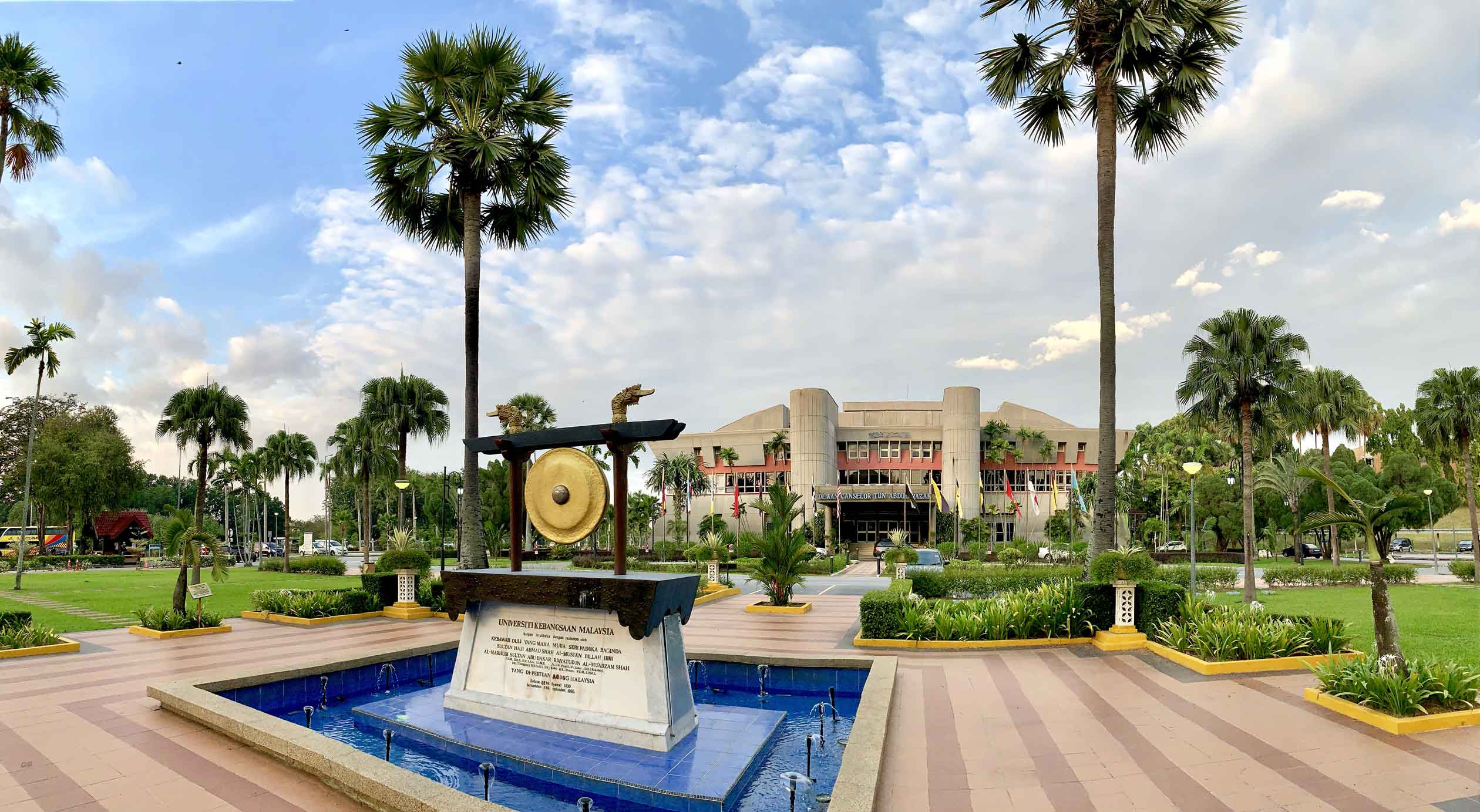
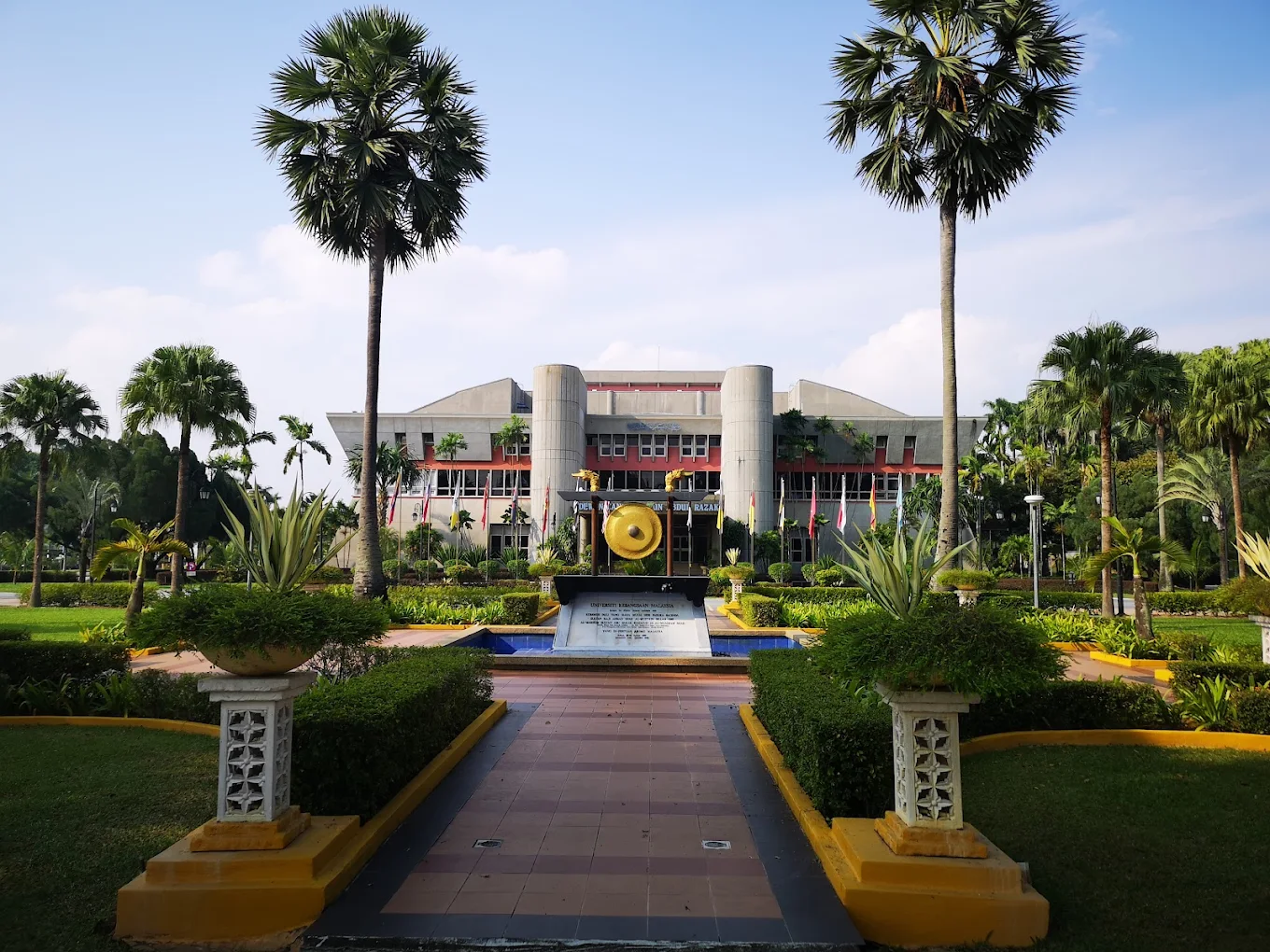
UKM’s main campus spans over 1,000 hectares in Bangi and features modern academic, residential, and recreational infrastructure. Students benefit from advanced laboratories, digital learning centers, sports complexes, fully equipped lecture halls, and specialized research institutes.
The campus also includes multiple student residences, dining facilities, libraries, recreational lakes, and medical clinics. Its international office provides full support for visa processing, accommodation, orientation, and cultural integration.
Campus Highlights
• Smart classrooms, innovation labs, and faculty-specific research centers
• Sports facilities including stadiums, gyms, and swimming pools
• Student residences and dining halls within walking distance of faculties
• International student services offering visa, counseling, and academic support
Faculties & Academic Programmes
UKM offers a comprehensive selection of undergraduate, postgraduate, and research programmes designed to meet global industry needs.
| Faculty | Academic Focus |
|---|---|
| Faculty of Engineering & Built Environment | Engineering, architecture, and built environment |
| Faculty of Medicine | Medicine, medical sciences, and clinical research |
| Faculty of Economics & Management | Economics, business administration, accounting, and entrepreneurship |
| Faculty of Information Science & Technology | Computer science, information technology, software engineering, and information systems |
| Faculty of Social Sciences & Humanities | Psychology, communication, geography, languages, sociology, and humanities |
| Faculty of Science & Technology | Science, technology, mathematics, and related research fields |
| Faculty of Education | Education, teaching, curriculum, and related educational fields |
| Faculty of Law | Legal studies and law |
| Faculty of Islamic Studies | Islamic studies, Shariah, Arabic studies, Islamic civilization, and related fields |
| Faculty of Health Sciences | Biomedical science, audiology, dietetics, diagnostic imaging, environmental health, and other health sciences |
| Faculty of Dentistry | Dentistry and oral health |
| Faculty of Pharmacy | Pharmacy and pharmaceutical sciences |
UKM also offers foundation studies, diploma pathways, and PhD programmes in research-driven fields.
Its teaching philosophy focuses on holistic development, values-based learning, and real-world skill application.
Scholarships & Financial Support
UKM provides various scholarship opportunities for both undergraduate and postgraduate international students. These awards recognize academic merit, leadership qualities, and research capabilities.
Scholarships may include tuition fee reductions, full-fee waivers, living allowances, or accommodation sponsorship. UKM is known as an affordable option for international students because of Malaysia’s lower living costs and the university’s commitment to educational accessibility.
Financially constrained students benefit from UKM’s research grants, international student subsidies, and government-funded scholarship options.
UKM Scholarships & Financial Support
- UKM Vice-Chancellor’s Gold Scholarship: For outstanding local and international postgraduate students pursuing Master’s or PhD studies in research or mixed mode. It can cover tuition fees, living allowance, accommodation allowance, and other benefits.
- UKM Vice-Chancellor’s Silver Scholarship: For academically outstanding postgraduate students. It provides tuition-fee support along with living and accommodation allowances, subject to the scholarship conditions.
- Research Zamalah Scheme: Financial support mainly for full-time Master’s (research) and PhD students to help with research and study costs. The current 2025/26 scheme specifically offers tuition-fee assistance.
- Graduate Research Assistance (GRA): For postgraduate students involved in research projects. Students work as research assistants and receive a monthly allowance, subject to available research grants and eligibility.
- UKM Student Financial Assistance (Dermasiswa): Financial assistance intended to reduce the financial burden of eligible students, including selected students from low- and lower-middle-income countries.
- UKM Zakat Assistance: Financial support for eligible students experiencing financial hardship, which can help with tuition fees, living expenses, and other education-related costs.
- Research Allocation Fund: Funding support connected to research activities and expenses, rather than a conventional student scholarship.
Universiti Kebangsaan Malaysia Courses
Universiti Kebangsaan Malaysia courses cover a wide range of undergraduate and postgraduate disciplines, making UKM a suitable option for students with different academic and career interests. The university offers programmes across fields such as medicine, engineering, business, information technology, law, science, education, and the humanities.
| Study Area | Popular Courses / Programmes |
|---|---|
| Medicine & Health Sciences | Medicine, Dentistry, Pharmacy, Nursing, Biomedical Sciences, and other health sciences |
| Engineering & Built Environment | Civil Engineering, Electrical Engineering, Mechanical Engineering, Chemical Engineering, Architecture, and Built Environment |
| Economics & Management | Economics, Accounting, Business Administration, Finance, Entrepreneurship, and Management |
| Information Science & Technology | Computer Science, Information Technology, Software Engineering, Information Systems, and related technology fields |
| Science & Technology | Biology, Chemistry, Physics, Mathematics, Environmental Science, and related disciplines |
| Social Sciences & Humanities | Psychology, Communication, Languages, Sociology, Geography, History, and Humanities |
| Education | Education, Teaching, Curriculum Studies, and related educational fields |
| Law | Law and Legal Studies |
| Islamic Studies | Islamic Studies, Shariah, Arabic Studies, and Islamic Civilisation |
| Postgraduate Studies | Master’s and PhD programmes across various academic and research disciplines |
Student Life & International Community
The Universiti Kebangsaan Malaysia campus offers a dynamic and culturally rich student environment. Learners from Asia, the Middle East, Europe, and Africa contribute to a globally diverse atmosphere that enhances learning beyond the classroom.
Students participate in cultural festivals, academic societies, sports clubs, innovation competitions, leadership programmes, and community development activities. Residential life includes social events, recreational activities, and student mentorship programmes.
Dining halls offer a variety of Malaysian and international cuisine, while on-campus facilities ensure students experience a safe, comfortable, and inclusive lifestyle.
Why Choose This University?
Universiti Kebangsaan Malaysia stands out as a premier academic destination for international students seeking high-quality education with strong global relevance. Its rigorous academic environment, internationally recognized research output, and supportive student services make it a top choice in Malaysia.
Reasons to Choose UKM
• Globally ranked #130 in QS World University Rankings 2027 and #24 in QS Asia University Rankings.
• Affordable education with strong scholarship opportunities
• Multicultural and inclusive campus with excellent student services
• Modern, industry-aligned programmes offering strong career pathways
• Research strength across engineering, medicine, business, and social sciences
Admission Process for International Students
The Universiti Kebangsaan Malaysia admission process is designed to support international applicants with clear guidelines and accessible resources.
Eligibility Requirements
| Requirement | Details |
|---|---|
| Academic Qualification | Meet the academic entry requirements for the selected programme. |
| English Proficiency | Depending on the programme, accepted qualifications may include IELTS, TOEFL, MUET, PTE, or other recognised tests. |
| Programme Requirements | Some programmes may have additional subject, interview, test, or other requirements. |
Documents Required
| Document | Requirement |
|---|---|
| Academic Certificates & Transcripts | Required to demonstrate previous academic qualifications. |
| Passport/Identification | Required for international student applications. |
| English Test Results | Required where applicable according to the programme's requirements. |
| Additional Documents | May include programme-specific documents, such as a research proposal for research-mode postgraduate applications. |
UKM Admission Process
| Step | What to Do |
|---|---|
| 1. Choose a Programme | Select your preferred programme and check its specific admission requirements. |
| 2. Apply Online | Submit your application through the relevant UKM online application portal. |
| 3. Upload Documents | Provide the required academic and supporting documents. |
| 4. Pay Application Fee | Pay the applicable application or processing fee. |
| 5. Check Application Status | Monitor your application through the online system. |
| 6. Receive Offer Letter | Successful applicants receive an official offer from UKM. |
| 7. Complete Visa Process | International students complete the Visa Approval Letter (VAL/eVAL) and required immigration procedures. |
| 8. Register at UKM | Travel to Malaysia and complete the required registration and post-arrival procedures. |
Intake & Accommodation
| Aspect | Details |
|---|---|
| Intakes | Intake dates vary by programme and study level. Applicants should check the specific intake for their chosen programme. |
| International Undergraduate Applications | UKM's general international undergraduate application period is typically February to May, while some direct-intake programmes have different schedules. |
| Accommodation | International students can apply for on-campus accommodation, subject to availability. Students are advised to make arrangements before arrival where possible. |
Career Prospects & Alumni Highlights
UKM graduates are highly employable due to the university’s strong industry partnerships and research-oriented programmes. Careers span engineering, medicine, business, ICT, public administration, education, and scientific research.
UKM’s career development centers provide internship placement, resume training, job fairs, and employer networking events. Alumni have gone on to leadership roles in multinational companies, government agencies, research organizations, and educational institutions worldwide.
- Career Development: UKM provides career support through career guidance, employer networking, job fairs, and career preparation activities.
- Internship & Industry Exposure: Students can gain practical experience through internships, industry-related activities, and employer engagement opportunities.
- Career Opportunities: Graduates can pursue careers across engineering, medicine, business, ICT, education, public administration, and scientific research.
- Employer Connections: UKM’s career activities connect students with employers and industry representatives, helping them explore career opportunities.
- Alumni Network: UKM has a broad alumni community working across business, government, research, education, and other professional fields.
- Leadership & Professional Growth: Career and student-development activities help students build communication, teamwork, leadership, and workplace skills.
- Global Opportunities: UKM’s international community and collaborations provide students with opportunities to develop international academic and professional exposure.
Living in Bangi, Malaysia
The city of Bangi offers a peaceful, affordable environment suitable for international students. It is known for its safety, greenery, and convenient access to Kuala Lumpur. Bangi has a warm, humid tropical climate throughout the year, with an average temperature of around 26°C. Average daytime temperatures generally range from about 29°C to 32°C, while nights are typically around 22°C–23°C.
Cost of living is moderate, with affordable food, housing, and transportation. Students enjoy a multicultural lifestyle, warm climate, and a strong community spirit.
Public transport connects Bangi to major Malaysian cities, while the surrounding area provides shopping malls, cafés, libraries, and recreational facilities.
Conclusion
Universiti Kebangsaan Malaysia (UKM) stands out as a leading public research university that combines strong academic foundations with global recognition and practical relevance. With its high international rankings, comprehensive range of programmes, and research-driven teaching approach, UKM provides an environment where students can develop academically, professionally, and personally.
From modern campuses and advanced facilities to generous scholarship opportunities and strong career support, UKM offers a complete university experience for international students. For those seeking to study in Malaysia at a globally ranked institution with a multicultural community, affordable living, and excellent career prospects, UKM represents a reliable and future-focused choice.
FAQs
1. Is Universiti Kebangsaan Malaysia accredited internationally?
Yes. UKM is a recognised Malaysian public university, and its programmes are subject to accreditation and quality requirements set by relevant Malaysian authorities and professional bodies, depending on the field of study.
2. Is UKM suitable for students who do not speak Malay?
Yes. International students can study at UKM, and the language of instruction varies by programme. Students should check the specific programme details to confirm whether courses are taught in English, Malay, or both.
3. Can international students transfer credits from another university to UKM?
Credit transfer may be possible for eligible students, but approval depends on the programme, previous qualifications, course equivalency, and UKM's applicable credit-transfer policies.
4. Does UKM offer part-time study options?
UKM offers different study modes depending on the programme, including selected part-time and flexible study options. Applicants should check the study mode listed for their preferred programme before applying.
5. Can students change their programme after joining UKM?
Programme changes may be possible under specific academic and administrative conditions. Students generally need to meet the requirements of the new programme and obtain approval from the relevant university authorities.
6. Does UKM provide healthcare services for students?
Yes. UKM has healthcare facilities and services that support the health and wellbeing of its students. The university also has major medical facilities associated with its Kuala Lumpur campus.
7. What is the main campus of UKM like for international students?
UKM's main campus in Bangi provides an integrated university environment where students can access academic facilities, research centres, student services, recreational spaces, and everyday amenities within the campus community.
8. Can international students participate in student exchange programmes at UKM?
Yes. UKM's international and mobility activities provide opportunities for students to participate in exchange, mobility, and international academic programmes, subject to programme eligibility and partner-university arrangements.
9. What language skills are useful for international students at UKM?
English is useful for academic communication in many programmes, while learning basic Malay (Bahasa Malaysia) can make everyday communication, interaction with local students, and life outside campus easier.
10. What makes UKM different from other public universities in Malaysia?
UKM has a distinctive national-university identity, a strong emphasis on research and postgraduate education, and a broad academic portfolio spanning areas such as medicine, engineering, science, social sciences, law, Islamic studies, and technology. Its main campus in Bangi also provides a large, integrated university environment.