

Table of Contents
Introduction to DRB HICOM University
DRB HICOM University, officially known as DRB-HICOM University of Automotive Malaysia, is a private university in Pekan, Pahang, with a strong focus on education related to the automotive ecosystem. The university began as the International College of Automotive Malaysia (ICAM) in April 2010 and became a full-fledged university in October 2015. Today, it operates from a 42-acre campus located within the DRB-HICOM Automotive Complex in Pekan.
The university has two main faculties: the Faculty of Engineering & Technology and the Faculty of Business & Management. It offers programmes across diploma, degree and postgraduate levels, with its academic offerings designed around industry requirements and practices.
A key feature of DRB HICOM University is its “University by the industry, for the industry” approach. According to the university, its curriculum combines theoretical knowledge with practical learning and is mapped to the changing needs of industry. The Faculty of Engineering & Technology also states that the university is supported by more than 80 operating companies within the DRB-HICOM Group, helping strengthen its industry-driven academic environment.
For prospective students researching DRB HICOM University fees, the university provides programme-specific information through its admissions channels. Students can contact the university directly for current fee details and application guidance.
History & Background
DRB HICOM University, officially known as DRB-HICOM University of Automotive Malaysia, began its journey as the International College of Automotive Malaysia (ICAM) in April 2010. It became a full-fledged university in October 2015 and now operates from a 42-acre campus within the DRB-HICOM Automotive Complex in Pekan, Pahang.
The university was established with a strong connection to the automotive industry and aims to contribute to the development of human capital for the automotive ecosystem. Its academic structure currently includes the Faculty of Engineering & Technology and the Faculty of Business & Management, with programmes offered at diploma, degree and postgraduate levels.
A defining feature of DRB HICOM University is its “University by the industry, for the industry” approach. The university states that its curriculum combines theoretical knowledge with practical learning and is continuously mapped to changing industry requirements and practices. Its Faculty of Engineering & Technology is supported by more than 80 operating companies under the DRB-HICOM Group, further strengthening its industry-driven academic environment.
The university’s vision is to become an ASEAN institution for innovation, research and education within the automotive ecosystem and sustainable development. Its mission emphasizes global entrepreneurial leadership, innovation, quality, competitiveness, partnerships and sustainable development.
Campus Environment & Facilities
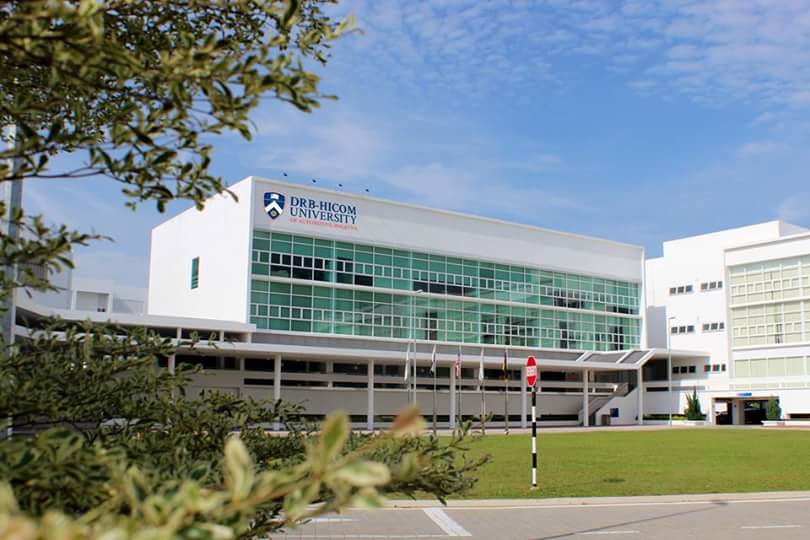
DRB-HICOM University Malaysia offers a modern and industry-ready learning environment. The campus is designed to support technical learning with real-world applications.
Located in the heart of the Pekan Automotive Park, the university benefits from proximity to manufacturing plants, service centers, and industrial facilities.
Key Campus Features
- 42-acre campus located within the DRB-HICOM Automotive Complex in Pekan
- Engineering and technology-focused learning facilities supporting practical education
- Academic facilities serving the Faculty of Engineering & Technology and Faculty of Business & Management
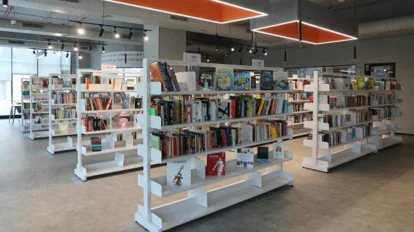
- A Resource Centre supporting students' academic and learning needs
- University Village providing accommodation options for students
- Student affairs and academic management support
- Facilities and services managed through dedicated university departments, including Facility Management and University Village Management
The university also provides hostel accommodation for both local and international students, with different room configurations and rates available. International students can choose from options including one-, two-, three- and four-bedded rooms, subject to availability.
With its location within the DRB-HICOM Automotive Complex and its emphasis on practical, industry-relevant education, DRB HICOM University provides an environment designed to connect classroom learning with the needs of the automotive and related industries.
Faculties and Programmes at DRB-HICOM University
DRB HICOM University currently has two main faculties: the Faculty of Engineering & Technology and the Faculty of Business & Management. According to the university, its academic offerings are designed with an emphasis on the automotive ecosystem and industry requirements. The university's Faculty of Engineering & Technology is supported by more than 80 operating companies under the DRB-HICOM Group, while the university states that its programmes are accredited by the Malaysian Qualifications Agency (MQA).
Faculty of Engineering & Technology
The Faculty of Engineering & Technology focuses on engineering, automotive technology and related technical disciplines. Its programmes include:
Foundation
- Foundation in Engineering
Diploma
- Diploma in Automotive Technology
- Diploma of Engineering Technology in Aerospace Composite Manufacturing
- Diploma in Mechanical Engineering Technology
- Diploma in Occupational Safety & Health
- Diploma in Automotive Engineering Technology (Motorsport)
- Diploma in Information Technology
Bachelor's Degree
- Bachelor of Mechanical Engineering Technology with Honours
- Bachelor of Mechanical Engineering Technology (Mechatronic) with Honours
- Bachelor of Mechanical Engineering Technology (Automotive) with Honours
- Bachelor of Mechanical Engineering Technology (Industrial Design) with Honours
- Bachelor in Occupational Safety & Health with Honours
- Bachelor of Engineering Technology in Aerospace Composite Manufacturing with Honours
- Bachelor of Information Technology with Honours
Postgraduate
- Master of Science in Engineering Technology
- Master of Science in Industrial Design
- PhD in Engineering
The university describes the faculty as having automotive engineering technology facilities that support teaching, learning, applied research and innovation.
Faculty of Business & Management
The Faculty of Business & Management offers programmes covering business, accounting, management and supply chain-related areas.
Foundation
- Foundation in Business
Diploma
- Diploma in Automotive Parts Management
- Diploma in Procurement Management
Bachelor's Degree
- Bachelor of Accountancy (Honours)
- Bachelor of Business Administration (Honours) in Management
- Bachelor of Business Administration (Honours) in Supply Chain Management
Postgraduate
- Master of Management
- Master of Business Administration
- PhD in Management
The university also lists postgraduate certificates in areas such as project management and supply chain management, alongside selected postgraduate programmes.
Industry-Focused Study Options
The programmes at DRB HICOM University are structured around the university's industry-oriented approach. For example, the Diploma in Automotive Technology covers areas including engine technology, drivetrain systems, chassis technology, electrical and electronic systems, automotive air-conditioning and vehicle maintenance, followed by an industry internship.
Students can also pursue specialised areas such as motorsport engineering technology, mechatronics, manufacturing, industrial design, supply chain management and business administration. Programme availability, entry requirements, study duration and fees vary by qualification and student category.
DRB-HICOM University Fees
The DRB HICOM University fees vary according to the programme, level of study and student category. The university publishes separate fee structures for local and international students. For international students, the current official fee structure is subject to 6% SST effective 1 July 2025. The totals below include the tuition and other fees listed by the university.
International Student Fees
| Programme | Duration | Tuition Fee (RM) | Other Fees (RM) | Total Fee (RM) |
|---|---|---|---|---|
| Foundation in Engineering | 1 year | 11,720 | 6,830 | 18,550 |
| Foundation in Business | 1 year | 9,810 | 6,930 | 16,740 |
| Diploma in Procurement Management | 2.5 years | 31,000 | 11,420 | 42,420 |
| Diploma in Automotive Parts Management | 2.5 years | 31,000 | 11,420 | 42,420 |
| Diploma in Automotive Technology | 2.5 years | 44,900 | 11,720 | 56,620 |
| Diploma in Aerospace Composite Manufacturing | 2.5 years | 44,900 | 10,350 | 55,250 |
| Diploma in Mechanical Engineering Technology | 2.5 years | 44,900 | 11,720 | 56,620 |
| Diploma in Occupational Safety & Health | 2.5 years | 37,950 | 10,350 | 48,300 |
| Diploma in Information Technology | 2.5 years | 51,000 | 14,020 | 65,020 |
| Diploma in Automotive Engineering Technology (Motorsport) | 2.5 years | 44,900 | 11,720 | 56,620 |
| Bachelor of Accountancy (Honours) | 3.5 years | 60,000 | 13,890 | 73,890 |
| Bachelor of Business Administration (Honours) in Supply Chain Management | 3 years | 51,160 | 12,970 | 64,130 |
| Bachelor of Business Administration (Honours) in Management | 3 years | 51,160 | 12,970 | 64,130 |
| Bachelor of Mechanical Engineering Technology (Mechatronic) with Honours | 4 years | 73,800 | 14,290 | 88,090 |
| Bachelor of Mechanical Engineering Technology with Honours | 4 years | 73,800 | 14,290 | 88,090 |
| Bachelor of Mechanical Engineering Technology (Automotive) with Honours | 4 years | 73,800 | 14,290 | 88,090 |
| Bachelor of Mechanical Engineering Technology (Industrial Design) with Honours | 4 years | 73,800 | 14,290 | 88,090 |
| Bachelor in Occupational Safety & Health with Honours | 4 years | 73,800 | 14,290 | 88,090 |
| Bachelor of Engineering Technology in Aerospace Composite Manufacturing with Honours | 4 years | 73,800 | 14,290 | 88,090 |
| Bachelor of Information Technology with Honours | 3 years | 73,800 | 12,520 | 86,320 |
| MSc in Engineering Technology | 2 years | 45,000 | 12,650 | 57,650 |
| Master of Management (by Research) | 2 years | 37,440 | 11,350 | 48,790 |
| Master of Science in Industrial Design (by Coursework) | 2 years | 43,920 | 6,050 | 49,970 |
| Master of Business Administration (by Coursework) | 2 years | 37,440 | 5,450 | 42,890 |
| PhD in Engineering (by Research) | 3 years | 37,470 | 13,470 | 50,940 |
| PhD in Management (by Research) | 3 years | 32,470 | 13,470 | 45,940 |
Open Distance Learning Fees
| Programme | Duration | Tuition Fee (RM) | Other Fees (RM) | Total Fee (RM) |
|---|---|---|---|---|
| Master of Business Administration (MBA ODL) | 1 year 7 months | 22,500 | 7,250 | 29,750 |
| Doctor of Business Administration (DBA ODL) | 3 years | 40,960 | 9,500 | 50,460 |
| Diploma in Occupational Safety and Health (DOSH ODL) | 2.5 years | 28,660 | 7,350 | 36,010 |
| Bachelor in Data Science with Honours | 3 years | 38,160 | 8,870 | 49,250 |
Local Student Fees
For local students, the university currently lists the following fees for selected diploma programmes:
| Programme | Duration | Tuition Fee (RM) | Other Fees (RM) | Total Fee (RM) |
|---|---|---|---|---|
| Diploma in Automotive Technology | 2.5 years | 36,500 | 6,050 | 42,550 |
| Diploma in Occupational Safety & Health | 2.5 years | 26,900 | 5,350 | 32,250 |
| Diploma in Automotive Engineering Technology (Motorsport) | 2.5 years | 36,500 | 6,050 | 42,550 |
| Diploma in Procurement Management | 2.5 years | 25,200 | 5,950 | 31,150 |
| Diploma in Automotive Parts Management | 2.5 years | 25,200 | 5,950 | 31,150 |
The university notes that other fees are separate from tuition fees, so students should consider the total programme fee rather than tuition alone when estimating their study costs.
For the most current fees, students should verify the applicable structure with DRB-HICOM University before applying, as the university states that its published information is subject to change.
Scholarships & Financial Support
DRB HICOM University offers scholarship and sponsorship opportunities for both Malaysian and international students. The available financial support varies according to student status, programme level and eligibility.
Scholarships Available
- International Student Partial Tuition Fee Scholarship: International students enrolled in full-time Diploma, Degree or Postgraduate programmes may apply for a partial tuition-fee scholarship. The award covers 30% of tuition fees, subject to the university's selection process.
- Dermasiswa B40 Diploma Scholarship: Eligible Malaysian students from B40 households may receive support covering full tuition fees, other fees, accommodation fees and a monthly allowance, subject to the stated eligibility criteria.
- Partial Tuition Fee Scholarship for Malaysian Diploma Students: Eligible Malaysian students enrolled in full-time or part-time Diploma programmes may receive a scholarship of up to RM10,000, depending on household income.
- TVET Financial Assistance: The university also provides information on financial assistance options such as PTPK loans, selected state zakat or foundation assistance, and EPF withdrawals for eligible technical programmes.
Scholarships and financial assistance are subject to eligibility requirements, selection procedures and availability. The university also states that scholarship information may change without notice.
For international students, the 30% tuition-fee scholarship can help reduce the overall cost of studying at DRB-HICOM University, although students should also budget for other university charges, accommodation, visa-related expenses and living costs.
Student Life & International Community
Students at DRB-HICOM University enjoy a balanced lifestyle enriched by academic excellence, cultural diversity, and social engagement. With students from different backgrounds, the campus fosters multicultural interactions and global learning.
Residential life includes safe and comfortable hostels, communal dining, and regular student activities. Various clubs and societies allow students to explore interests such as sports, leadership, cultural events, and innovation.
International students benefit from dedicated support services, guidance centers, and a friendly environment that helps them adjust smoothly to university life in Malaysia.
Key Highlights
- University Village accommodation: DRB-HICOM University provides on-campus hostel accommodation through its University Village. International students can choose from different room types, including premium one-bedded, premium two-bedded, one-bedded, three-bedded and four-bedded rooms, subject to availability.
- International hostel rates: Published rates for international students range from RM240 to RM503 per month, depending on the room type. Premium rooms include attached bathrooms.
- Student Affairs Centre: The university has a dedicated Student Affairs Centre that supports students and is included in the university's induction and orientation activities.
- Orientation and induction: New students are introduced to key university departments, including the faculties, Student Affairs Centre, University Village Management, Resource Centre, Academic Management Centre and Student Representative Council.
- Student leadership: The induction programme includes interaction with the Student Representative Council and other student leaders, giving new students an introduction to student representation and campus leadership.
- Support for international arrivals: DRB-HICOM University representatives meet international students at the airport and guide them through the immigration process upon arrival in Malaysia.
- Student Pass assistance: International students receive support with the Student Pass process. After arrival, students must complete medical screening within 7 days at an EMGS-registered clinic before the Student Pass can be endorsed.
- Multicultural campus environment: The university's international admission and student-support structure accommodates students from outside Malaysia, with dedicated procedures for international applications, visas, arrival and accommodation.
- Academic and learning resources: Student induction includes introductions to the Resource Centre, academic faculties and other university departments, helping students understand the academic and support services available on campus.
- Location: The university is located at the DRB-HICOM Automotive Complex in Pekan, Pahang, giving students an academic environment closely connected with the university's automotive and industry-focused identity.
Why Choose DRB-HICOM University Malaysia?
- Industry-focused education: DRB-HICOM University follows a “University by the industry, for the industry” approach, with programmes designed around current industry requirements and practices.
- Specialized automotive environment: The university is located within the DRB-HICOM Automotive Complex in Pekan, Pahang, placing its 42-acre campus within an established automotive industry environment.
- Engineering and technology programmes: The Faculty of Engineering & Technology offers programmes covering areas such as automotive technology, mechanical engineering technology, mechatronics, industrial design, aerospace composite manufacturing and occupational safety and health.
- Industry-linked learning: The Faculty of Engineering & Technology is supported by more than 80 operating companies under the DRB-HICOM Group, strengthening the university's connection with industry.
- Practical learning: The university combines theoretical knowledge with practical learning and states that its curriculum is mapped to changing industry requirements, helping students develop relevant technical and professional skills.
- Business and management options: Students can also pursue programmes in areas such as accounting, business administration, management and supply chain management through the Faculty of Business & Management.
- Scholarship opportunities: DRB-HICOM University offers financial support options, including a 30% tuition-fee scholarship for eligible international students and several scholarship or assistance schemes for Malaysian students.
- International student support: International students receive assistance with application procedures, Student Pass processing, airport arrival and immigration procedures, as well as accommodation arrangements.
- Dedicated student accommodation: The university's University Village offers several room configurations for international students, with published rates varying according to room type.
- Career-oriented academic approach: With its industry-based curriculum and connection to the DRB-HICOM Group, the university provides students with an educational environment focused on developing skills relevant to automotive, engineering, technology and business sectors.
Admission Process for International Students
International students applying to DRB HICOM University must complete the university's application and Student Pass procedures before travelling to Malaysia.
Step 1: Submit Your Application
- Complete the online application form through the DRB-HICOM University website or contact the university at enquiries@dhu.edu.my.
- Submit a copy of your passport, academic certificates and available English-language proficiency results such as PTE, IELTS, TOEFL, CAE, CPE or MUET.
- The submitted documents are reviewed by the relevant faculty before an Offer Letter or Conditional Offer Letter is issued.
Step 2: Receive Your Offer Letter
- DRB-HICOM University states that students will receive a Conditional Offer Letter or Offer Letter within 7 days after submitting the requested documents by email.
- The offer is subject to verification of the student's academic documents and programme requirements.
Step 3: Apply for the Student Visa
- After receiving the offer, students must submit the documents required for the Student Visa application, including:
- Passport photographs with a white background
- Offer Letter or Conditional Offer Letter
- Passport copies of all pages
- Academic certificates
- Health Declaration Form
- Proof of payment of MYR 2,830 for visa, insurance and student processing fees, plus a MYR 1,500 security bond.
Step 4: Receive the Electronic Visa Approval Letter
- Approved applications receive an Electronic Visa Approval Letter (e-VAL) through the Education Malaysia Global Services (EMGS) system.
- Students can access and download the e-VAL once it has been issued.
Step 5: Apply for a Single Entry Visa
- Students from countries that require a visa to enter Malaysia must apply for a Single Entry Visa (SEV) at the relevant Malaysian embassy or mission overseas.
- The university states that processing can take 48 hours for e-VISA applications or 1–3 weeks through the normal process.
Step 6: Travel to Malaysia
- Students must have a valid passport, e-VAL and SEV where applicable before entering Malaysia.
- A DRB-HICOM University representative will meet international students at the airport and guide them through the immigration process.
- Malaysia Immigration issues a 30-Day Special Pass at the point of entry as a temporary permit while the Student Pass is processed.
Step 7: Complete Medical Screening
- Students must complete medical screening at an EMGS-registered clinic within 7 days of arrival in Malaysia.
- The medical results are submitted online to EMGS within four working days.
- Once the student is cleared, the university submits the passport to Malaysian Immigration for Student Pass endorsement.
Step 8: Receive the Student Pass and i-Kad
- Malaysian Immigration endorses the Student Pass on the student's passport for approved applications.
- The university states that this endorsement is completed within 10 working days.
- The i-Kad, which serves as the international student's identification card, is issued within 7 working days after the Student Pass is issued.
Accommodation Support
International students can also arrange accommodation through the university's University Village. The university provides different hostel room options for international students, subject to availability.
Career Prospects & Alumni Highlights
DRB-HICOM University graduates are highly employable due to the university’s strong industry collaboration. Students gain practical experience through internships at automotive plants and manufacturing facilities.
- Industry-oriented career preparation: DRB HICOM University combines theoretical knowledge with practical, hands-on learning through its “University by the industry, for the industry” approach, giving graduates technical and industry-relevant skills.
- Automotive career opportunities: Graduates of the Diploma in Automotive Technology can pursue technical and administrative roles in the automotive and after-sales services sectors.
- Engineering technology careers: Mechanical Engineering Technology graduates can work as engineering technologists, service or after-sales executives, and workshop operation executives.
- Mechatronics opportunities: Graduates of the Diploma in Mechatronics Engineering Technology can pursue roles such as assistant technologist, technician, technical assistant, supervisor and production controller technologist.
- Industrial design careers: The university lists career opportunities including industrial designer, product designer, technical analyst and production technologist for graduates of its Mechanical Engineering Technology (Industrial Design) programme.
- Motorsport career pathways: Graduates of the Diploma in Automotive Engineering Technology (Motorsport) can pursue roles related to motorsport training, race promotion, racing-team management and motorsport event coordination.
- Occupational safety careers: Graduates of the Occupational Safety & Health programme can work as Safety Supervisors, Occupational Hygienists, Safety and Health Practitioners, Safety Auditors, Safety Coordinators, Safety Advisers and Safety Officers.
- Aerospace opportunities: The Aerospace Composite Manufacturing programme prepares graduates for roles such as assistant composite technologist, technician, quality controller, junior technologist and production or quality-related positions.
- Industry exposure through internships: Several programmes incorporate dedicated industrial training or internships into the curriculum, allowing students to apply their academic knowledge in workplace settings.
- Connection with the DRB-HICOM Group: The university operates within the wider DRB-HICOM Group and states that its curriculum is mapped to changing industry requirements and practices. This provides an industry-connected environment for students preparing to enter the workforce.
- Alumni engagement: The university's convocation process includes a dedicated Student Affairs & Alumni function and an alumni registration process, demonstrating an established alumni administration alongside graduate tracking activities.
Living in Pahang, Malaysia
Pahang is one of Malaysia’s largest and most scenic states, known for its peaceful environment and low cost of living. For international students, Pahang provides an affordable lifestyle with essential conveniences, friendly locals, and a safe atmosphere.
The state offers a tropical climate, rich cultural heritage, and natural attractions such as beaches, forests, and rivers. Connectivity is efficient with bus, highway, and nearby airport access.
Pahang is considered one of Malaysia’s safest places for students, making it ideal for international learners.
Key Highlights
- Tropical climate: Pahang has a warm, humid tropical climate. Malaysia generally experiences temperatures of around 23°C to 32°C, with high humidity and substantial rainfall throughout the year. Pahang's east-coast location also means that the Northeast Monsoon can bring heavier rainfall during the monsoon season.
- Warm weather: Students should expect warm conditions for most of the year. Lightweight, breathable clothing, comfortable footwear and an umbrella or rain jacket are practical choices for everyday life.
- Rainfall: Malaysia's climate is characterised by high humidity and frequent rainfall. The Northeast Monsoon particularly affects exposed areas of the east coast of Peninsular Malaysia, including parts of Pahang.
- Natural surroundings: Pahang is the largest state in Peninsular Malaysia, with almost two-thirds of the state covered by rainforest. It is known for forests, waterfalls, lakes, beaches and other natural attractions.
- Pekan location: DRB-HICOM University is located in Pekan, giving students access to a smaller-town environment while studying within the DRB-HICOM Automotive Complex. The university's 42-acre campus is closely connected to its automotive and industry-focused identity.
- Local food: Pahang has a diverse food culture influenced by Malay, Chinese and Indian cuisines. Local specialities include Laksa Pahang, Mi Calong, Opor Pahang, Puding Raja and Ikan Patin. Pekan is also identified by Tourism Malaysia as one of the places where visitors can experience authentic Pahang food.
- Pahang's famous Ikan Patin: River fish, particularly patin (silver catfish), is an important part of Pahang's food culture. Temerloh is known as Bandar Ikan Patin, while patin-based dishes are found across the state.
- Multicultural environment: Malaysia has a diverse population with Malay, Chinese, Indian and indigenous communities. This diversity is reflected in the country's languages, festivals, traditions, religions and food, giving international students opportunities to experience different cultural practices.
- Local arts and traditions: Pahang has traditional crafts including batik, woodcarving and Tenun Pahang, a traditional woven fabric associated with the state. The Sultan Haji Ahmad Shah Royal Pahang Weaving Development Centre is one place where visitors can learn about traditional Pahang weaving.
- Nature and weekend activities: Students can explore attractions across Pahang, including Taman Negara, Endau-Rompin State Park, Tioman Island and Cameron Highlands. The state offers opportunities for nature trips, beaches, hiking, wildlife experiences and highland visits.
- Transport connections: Pahang is connected to Kuala Lumpur and neighbouring states by road, while Kuantan has Sultan Ahmad Shah Airport. Express buses also connect Pahang with Kuala Lumpur and other parts of Peninsular Malaysia.
- Language: Bahasa Melayu is Malaysia's national language, while English is widely spoken. Mandarin, Cantonese, Tamil and other languages are also commonly used within Malaysia's multicultural communities.
- Lifestyle for international students: Students living in Pahang can experience a combination of university life, local Malay culture, multicultural Malaysian cuisine and access to the state's extensive natural attractions. For students at DRB-HICOM University, the Pekan location also places their studies within an automotive-focused industrial environment.
Conclusion
DRB-HICOM University Malaysia is an excellent choice for students seeking a career-focused, industry-relevant education in automotive and engineering fields. With strong academic programmes, modern facilities, affordable fees, and real-world exposure, the university prepares graduates for successful global careers.
Students interested in studying in Malaysia are encouraged to explore DRB-HICOM University courses, check scholarship opportunities, and contact the admissions team to begin their application process.
Frequently Asked Questions About DRB-HICOM University
1. What English language requirements are needed for international students at DRB HICOM University?
English language requirements vary depending on the programme. International applicants may need to provide an English proficiency qualification such as IELTS, TOEFL, PTE, CAE, CPE or MUET. The specific score requirement should be checked for the intended programme.
2. Can I apply to DRB HICOM University without previous automotive work experience?
Yes. Previous automotive industry work experience is not generally required for entry-level programmes such as the Diploma in Automotive Technology. Applicants must meet the academic and other entry requirements specified for their chosen programme.
3. Can I progress from a foundation programme to a degree at DRB HICOM University?
Yes. The Foundation in Engineering and Foundation in Business are designed to prepare students for further undergraduate study. Progression depends on meeting the relevant entry and academic requirements for the chosen degree programme.
4. Does DRB HICOM University offer Open Distance Learning programmes?
Yes. DRB HICOM University offers selected programmes through Open Distance Learning (ODL). The university lists ODL options at diploma, bachelor's, master's and doctoral levels, allowing eligible students to pursue selected qualifications through distance learning.
5. Are there part-time study options at DRB HICOM University?
Yes. Selected programmes are available in part-time or flexible study modes. For example, the university offers its Master of Business Administration in a part-time format, while selected programmes are also available through ODL.
6. What does the Diploma in Automotive Technology at DRB HICOM University cover?
The Diploma in Automotive Technology covers areas related to automotive systems and vehicle technology, including engine technology, drivetrain systems, chassis technology, electrical and electronic systems, automotive air-conditioning and vehicle maintenance. The programme also includes industrial training.
7. Does DRB HICOM University offer Information Technology programmes?
Yes. DRB HICOM University offers Information Technology programmes, including a Diploma in Information Technology and a Bachelor of Information Technology with Honours. These programmes provide an alternative pathway for students interested in computing and technology-related careers.
8. Can students study business-related subjects at DRB HICOM University?
Yes. In addition to engineering and automotive programmes, the university offers business-related qualifications covering areas such as accounting, business administration, management and supply chain management through its Faculty of Business & Management.
9. Can working professionals study at DRB HICOM University?
Yes. Working professionals can consider the university's part-time and Open Distance Learning options, depending on the programme. These study modes can provide greater flexibility than conventional full-time study.
10. How can I check the latest DRB HICOM University fees before applying?
The DRB HICOM University fees vary by programme, study level and student category. The university publishes programme-specific fee structures, so applicants should check the latest official fee information for their chosen programme before submitting an application.